Showing posts with label Underwood New Music Readings. Show all posts

Wednesday, May 22, 2019

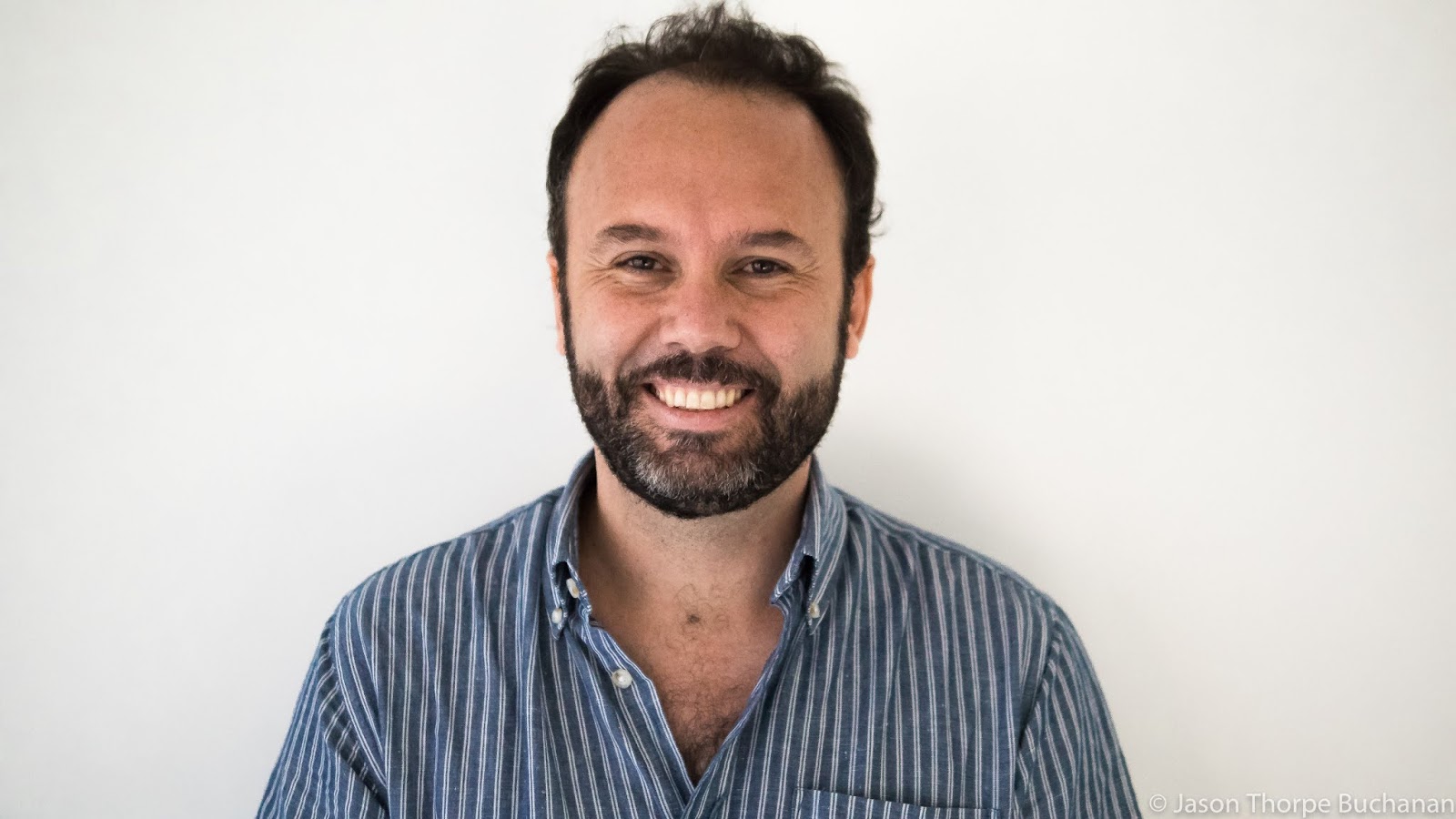
Underwood New Music Readings - Composer Spotlight: Chen Yihan

Much of Chen Yihan’s music seeks for a convergence of different points in time and space, connecting the past to the future and bringing different corners of the world together in an abstract, poetic, and emotional way that transcends culture and epoch. His music is often a play of lines, space, and intensity in a calligraphic way, reflecting his cultural roots in the Chinese arts. As a composer, Chen Yihan’s music has been performed by the Symphony Orchestra of the National Opera House (China), The Juilliard Orchestra, Longcheng Symphony Orchestra, The New York Virtuoso Singers, Cantoría Hong Kong, the Entre Madeiras Trio, among others. He has earned honors such as two ASCAP Foundation Morton Gould Young Composer Awards, the Jacobs School of Music Dean’s Prize, a winner of the Juilliard orchestra competition, to name a few.

Chen Yihan’s piece SPIRITUS was selected for the 2019 Underwood New Music Readings where it will be workshopped and read by American Composers Orchestra and conductor Ludovic Morlot. Chen Yihan spoke to us about the readings and his piece.

Rehearsals, workshops, and final readings are open to the public on May 23 and 24 at NYU's Frederick Loewe Theatre (35 W 4th St). RSVP here


Hear Chen Yihan's piece at the 2019 Underwood New Music Readings. Rehearsals, workshops, and final readings are open to the public on May 23 and 24 at NYU's Frederick Loewe Theatre (35 W 4th St). RSVP here

Learn more about Chen Yihan at www.yihanmusic.com

Follow Chen Yihan on Facebook, Twitter, and Instagram

Underwood New Music Readings - Composer Spotlight: Rodrigo Castro

Rodrigo Castro’s work is a counterpoint of ideas laid out in mosaic, fractal, and dendrite forms. Imbued with an esoteric spirit, the organic cell-driven structures that he creates in every piece project atmospheres where spectral and playful echoes are chanted in a shifting sense of time. Rodrigo’s music aims to perfume the environment with aleatoric waves that highlight the liminal spaces between individual and universal identities. His esoteric music evokes feelings or memories in each listener with spiritual and metaphorical considerations and with the aim to create musical landscapes that need to exist. As a troubadour of his own time, he uses the orchestra to redefine the vernacular melodies and rhythms of his Mexican and Cuban heritage. Rodrigo’s work is influenced by artists such as Silvio Rodríguez, Bob Dylan, Luis Eduardo Aute and Leonard Cohen.

Rodrigo’s piece La gaviota was selected for the 2019 Underwood New Music Readings where it will be workshopped and read by American Composers Orchestra and conductor Ludovic Morlot. Rodrigo spoke to us about the readings and his piece.

Rehearsals, workshops, and final readings are open to the public on May 23 and 24 at NYU's Frederick Loewe Theatre (35 W 4th St). RSVP here

Composer Rodrigo Castro

American Composers Orchestra: What was your reaction to finding out your piece had been selected for the Underwood New Music Readings?

Rodrigo Castro: Considering the somewhat challenging circumstances behind my piece’s inception, and its varying stages of development, I was astounded and relieved upon finding out that I was one of the selected composers. In the following days, I began to feel more of a sense of contentment and pride in my work and efforts. By now, I feel excited from the anticipation and, most of all, incredibly thankful for this important opportunity.

ACO: What are you doing to prepare for the readings? Are there any changes you have made to your piece?

RC: In preparation for the readings, I had to reconsider some aspects of my piece with a critical sense for both refinement and pragmatism. It was encouraging to know that I still had the chance to chisel away at some specific details that could ensure a more productive experience. With that in mind, I reworked some minor aspects of the orchestration in certain passages, as well as the approach to some extended techniques and even some editing of the overall layout of the piece. It was a refreshing review of my ideas after having some time to gather a more objective perspective on the aesthetic intentions proposed in the work. With a better sense for how to balance out some areas, that may not have been entirely convincing, or even properly formed at first, the piece is now imbued with a new sense for the occasion.

ACO: What are you looking forward to about the workshops and readings? What do you hope to learn from the experience?

RC: I am very much looking forward to meeting all of the wonderful people behind this project. Naturally, the emphasis is on the experience of hearing my piece and learning all that there is still to learn about my work, but the feeling of belonging to such an important moment shared by all who are involved, is undoubtedly something to look forward to as well. As it is, composers of new music do not often have a such a significant chance to learn more about their creative ideas through a tangible experience, and everything has been set up for us to really dive deep into the atmosphere of our field. This is where the abstractness of what we do will become a reality that we can engage with. Our art form is mostly driven by context, and these readings are an important next step for our development in light of that pursuit.

I hope to learn about specific concerns, such as finding an equilibrium between one’s distinctive artistic vision and the practical considerations implied when working with an ensemble and within the protocols of our trade. I also hope that I will learn more, and in a comprehensive manner, about what it really means to be a composer in our world and of our times, through what promises to be a very meaningful experience.

Hear Rodrigo's piece at the 2019 Underwood New Music Readings. Rehearsals, workshops, and final readings are open to the public on May 23 and 24 at NYU's Frederick Loewe Theatre (35 W 4th St). RSVP here

Underwood New Music Readings - Composer Spotlight: Jack Hughes

Jack Hughes is a Chicago-based composer who is interested in exploring the ways in which the inner life of sound interacts with a listener’s mind, body and soul. While Jack avoids being prescriptive in the response his music elicits, one of his core values is for his music be meaningful on some level to all audience members, regardless of their musical knowledge. He seeks to foster musical experiences in which imagination, empathy, and trust flow in all directions among the composer, performers, and listeners. He is currently a PhD candidate at the University of Chicago, where he studies with Augusta Read Thomas. Jack Hughes received his Bachelor of Music degree in composition and theory at the Cleveland Institute of Music, in the studio of Keith Fitch. Jack served as composer fellow of San Francisco’s Volti choral ensemble in 2017 and of the Canton Symphony Orchestra in 2014.

Jack’s piece Needlepoint was selected for the 2019 Underwood New Music Readings where it will be workshopped and read by American Composers Orchestra and conductor Ludovic Morlot. Jack spoke to us about the readings and his piece.

Rehearsals, workshops, and final readings are open to the public on May 23 and 24 at NYU's Frederick Loewe Theatre (35 W 4th St). RSVP here

Composer Jack Hughes. Photo by Phillip Sossenheimer

American Composers Orchestra: What was your reaction to finding out your piece had been selected for the Underwood New Music Readings?

Jack Hughes: I was thrilled. Right after receiving the email I found myself reflecting on the two weeks in August when I was working on one of the most difficult sections of the piece. It was incredibly hot in Chicago and composing felt exceedingly slow and difficult. To keep myself motivated I would imagine how exciting it would be to hear the work performed live, and it was so gratifying to find out that this hypothetical performance was going to become an actual performance!

ACO: What are you doing to prepare for the readings? Are there any changes you have made to your piece?

JH: I'm trying to study my score in a more detached and practical way--almost as though I didn't write the piece. This more detached relationship to the piece is a nice contrast to the intensely personal connection we often feel to our pieces while composing. I'm trying to think very practically: highlighting spots that might potentially be difficult for the orchestra and coming up with some potential alternative dynamics or registral changes in case a passage needs revision. Most of the changes I've made to my piece have just been small tweaks and formatting changes. With orchestral music the editing never ends!

ACO: What are you looking forward to about the workshops and readings? What do you hope to learn from the experience?

JH: I'm so excited to meet the other participating composers and to hear their works. And I look forward to speaking with audience members about their experience of the concert. Hearing ACO read and assemble my piece will be a special experience that will help me understand orchestral composition in a deeper way.

Hear Jack's piece at the 2019 Underwood New Music Readings. Rehearsals, workshops, and final readings are open to the public on May 23 and 24 at NYU's Frederick Loewe Theatre (35 W 4th St). RSVP here

Follow Jack on Soundcloud

Underwood New Music Readings - Composer Spotlight: Jihyun Kim

Jihyun Kim’s music has been performed in the prestigious venues around the world, including Weill Recital Hall at Carnegie Hall, the Cloisters at the Metropolitan Museum of Art, Bruno Walter Auditorium at Lincoln Center, Seiji Ozawa Hall, Harris Hall in Aspen, DiMenna Center, Palazzo Medici Riccardi in Florence Italy, and Seoul Arts Center in Korea. Jihyun’s works were performed by eminent ensembles such as Tanglewood New Fromm Players, Aspen Contemporary Ensemble, JACK Quartet, PUBLIQuartet, Asciano Quartet, Karien Ensemble, Switch Ensemble, Aspen Conducting Academy Orchestra, Cornell Festival Orchestra, Bloomington Trio, and Chanticleer LAB Choir, and were featured in Tanglewood Music Center, Aspen Music Festival, Mayfest, the University of South Florida New Music Festival, Midwest Composers Symposium, and Korean Music Expo.

Jihyun’s piece A Tramp in the Assembly Line was selected for the 2019 Underwood New Music Readings where it will be workshopped and read by American Composers Orchestra and conductor Ludovic Morlot. Jihyun spoke to us about the readings and his piece.

Rehearsals, workshops, and final readings are open to the public on May 23 and 24 at NYU's Frederick Loewe Theatre (35 W 4th St). RSVP here

Composer Jihyun Kim

American Composers Orchestra: What was your reaction to finding out your piece had been selected for the Underwood New Music Readings?

Jihyun Kim: I was extremely happy to find out that my piece was selected among many others; this is the opportunity that I have been always wanting to participate in, as I have seen my friends participating in previous editions and really enjoying the experience. Especially with this work, I am very excited to hear the work come to life by a wonderful orchestra specialized in new music.

ACO: What are you doing to prepare for the readings? Are there any changes you have made to your piece?

JK: I have been making a few changes for the readings: One of the mentors, Mr. Derek Bermel gave productive comments on the piece and also the publisher, Mr. Bill Holab, gave me suggestions on perfecting the layout of the score/parts.

ACO: What are you looking forward to about the workshops and readings? What do you hope to learn from the experience?

JK: I am very much looking forward to working with ACO under the baton of maestro Ludovic Morlot, and hearing the valuable insight of the renowned mentor composers, Derek Bermel, Tania León, and Anthony Cheung. It will also be an inspiring experience to hear the works of my colleagues. It is exciting to see the workshops that ACO is offering: meeting with the publishers and presenters and learning about the world of publishing and programing will provide me with critical information and knowledge that every young composer needs.

Hear Jihyun's piece at the 2019 Underwood New Music Readings. Rehearsals, workshops, and final readings are open to the public on May 23 and 24 at NYU's Frederick Loewe Theatre (35 W 4th St). RSVP here

Learn more about Jihyun at www.noeljihyunkim.com

Underwood New Music Readings - Composer Spotlight: inti figgis-vizueta

inti figgis-vizueta is a queer Andinx experimental composer based in Brooklyn, NY. They write identity-focused musics, often channeling story-telling and the manifestation of non-hegemonic voices in concert spaces. inti works to create transparent, self-contained musical processes through which melodic and timbreal interaction blooms and consumes itself. inti studied with Felipe Lara. inti has received numerous awards, most recently the 2019 Hildegard Competition from National Sawdust and the 2019 Mizzou International Composer’s Festival featuring Alarm Will Sound. They’ve won calls for scores for organizations such as Verdant Vibes, N/A Ensemble, UnTwelve, Baltimore Choral Arts, and 113 Collective. Their music has also been played by ensembles such as loadbang, PUBLIQuartet, Hypercube, RTE Contempo String Quartet, and Balance Campaign as well as the Shenandoah Valley Youth Orchestra and SJSU Wind Ensemble.

inti’s piece Symphony for the Body was selected for the 2019 Underwood New Music Readings where it will be workshopped and read by American Composers Orchestra and conductor Ludovic Morlot. inti spoke to us about the readings and his piece.

Rehearsals, workshops, and final readings are open to the public on May 23 and 24 at NYU's Frederick Loewe Theatre (35 W 4th St). RSVP here

Composer inti figgis-vizueta. Photo by Ella Joklik

American Composers Orchestra: What was your reaction to finding out your piece had been selected for the Underwood New Music Readings?

inti figgis-vizueta: I was incredibly excited, obviously; having an orchestra put its weight behind my music, even for a few hours, is something incredibly thrilling. I am also happy to join the long lineage of music whose early stages were nurtured and incepted by this supportive, forward-thinking organization.

ACO: What are you doing to prepare for the readings? Are there any changes you have made to your piece?

IFV: My main goal is making sure my notation is as clear as possible, so that most of our rehearsal is spent on music-making rather than the initial dance that notation as specific as mine sometimes requires. Through previous readings with both conservatory and youth orchestras I was able to integrate best practices I had the privilege to observe.

ACO: What are you looking forward to about the workshops and readings? What do you hope to learn from the experience?

IFV: I'm excited to hear the music of my fellow participants and have mentorship from Tania Leon, a longtime inspiration and hero. I value community-building above all in my musical practice and the Underwood Readings are another branch in which to grow.

Hear inti's piece at the 2019 Underwood New Music Readings. Rehearsals, workshops, and final readings are open to the public on May 23 and 24 at NYU's Frederick Loewe Theatre (35 W 4th St). RSVP here

Learn more about inti at www.inticomposes.com
Follow inti on Facebook, Twitter, and Instagram

Underwood New Music Readings - Composer Spotlight: Aaron Israel Levin

Aaron Israel Levin writes music that is guided by the emotional dynamism of storytelling and drama. He draws from a variety of musical and non-musical influences – including film, theater, and performance art – to create compositions that are both personal and wide-ranging. Aaron’s music has been performed by the Bent Frequency Duo, Fifth House Ensemble, loadbang, Pavia Winds, the Yale Philharmonia, mezzo-sopranos Kayleigh Butcher and Lisa Neher, and percussionists Dmitrii Nilov and Sam Um. Passionate about collaboration, Aaron frequently works with artists from different mediums. He has collaborated multiple times with playwright Christopher Gabriel Nuñéz, and has also developed projects with projection designer Johnny Moreno, and choreographers Celeste Miller and Mary Gwin.

Aaron’s piece In Between was selected for the 2019 Underwood New Music Readings where it will be workshopped and read by American Composers Orchestra and conductor Ludovic Morlot. Aaron spoke to us about the readings and his piece.

Rehearsals, workshops, and final readings are open to the public on May 23 and 24 at NYU's Frederick Loewe Theatre (35 W 4th St). RSVP here

Composer Aaron Israel Levin. Photo by Eric Snoza

American Composers Orchestra: What was your reaction to finding out your piece had been selected for the Underwood New Music Readings?

Aaron Israel Levin: I really couldn’t believe it because I was so elated. I think I immediately emailed the composition teacher who had worked with me on the piece that it had been selected, and it was a really special moment sharing that news with him. So many fantastic composers have worked with the American Composers Orchestra through the Underwood New Music Readings over the years, and I am deeply humbled to be included this year.

ACO: What are you doing to prepare for the readings? Are there any changes you have made to your piece?

AIL: I made a few orchestrational changes to make certain moments more clear. I also decided to make the principle cellist more of a protagonist. In my initial draft, the solo cello doesn’t really speak until the end of the piece; but in this revision there is a solo moment right at the beginning, which I feel gives the work more of a complete, cyclical structure. I’m excited to hear how it works!

ACO: What are you looking forward to about the workshops and readings? What do you hope to learn from the experience?

AIL: I’m really looking forward to working with the fantastic mentor composers, Derek Bermel, Anthony Cheung, and Tania Léon, as well as the esteemed conductor Ludovic Morlot. I’ve never worked with a professional orchestra before, so I’m hoping to learn more about what that process is like, and what the best ways are for composers to effectively work with the conductor and the players in bringing a new piece of music to life. I’m also excited to meet the other participant composers and to hang out in New York City!

Hear Aaron's piece at the 2019 Underwood New Music Readings. Rehearsals, workshops, and final readings are open to the public on May 23 and 24 at NYU's Frederick Loewe Theatre (35 W 4th St). RSVP here

Learn more about Aaron at www.aaronisraellevin.com
Follow Aaron on Facebook, Twitter, and Instagram

Wednesday, July 18, 2018

Underwood New Music Readings - Composer Spotlight: Tomàs Peire Serrate

Tomàs Peire Serrate was born in Barcelona. He studied piano at the Sant Cugat del Vallès conservatory, where he grew up, and history at the Universitat Autònoma de Barcelona. After few years performing and teaching he decided to focus on composition, first studying at the Escola Superior de Música de Catalunya (Barcelona) with Salvador Brotons, and in 2009 at the Sibelius Academy of Helsinki (Finland) with Tapio Tuomela and Risto Väisänen. In 2011 he moved to New York with the La Caixa Fellowship to pursue a Master's in Scoring for Film and Multimedia at the New York University, where he graduated in 2013 obtaining the Elmer Bernstein Award. That year he moved to Los Angeles to explore the film music industry and participate as a composer in different projects including writing the music for the films The Anushree Experiments and Prism, and orchestrating and arranging music for If I Stay, Minions, and Love and Friendship.

In the fall of 2015, Tomàs initiated his PhD studies at UCLA, where he is having the privilege to study with Bruce Broughton, Richard Danielpour, Ian Krouse, Mark Carlson, Peter Golub and David S. Lefkowitz. His research at UCLA is about music, space and media, with particular interest in new technologies and virtual reality. His concert works have been performed in Europe, US and Asia, and is currently working on a short opera-monologue that will be premiered at the Off-Liceu series in Barcelona next June 2018.

Tomàs' piece Rauxa was selected for the 2018 Underwood New Music Readings where it was workshopped and read by American Composers Orchestra and maestro George Manahan. Tomàs received the $15k Audience Choice Commission to write a new piece for ACO to be performed during a future season. He spoke to us about the readings and his piece.

Composer Tomàs Peire Serrate

American Composers Orchestra: What was your reaction to finding out your piece had been selected for the Underwood New Music Readings? 

Tomàs Peire Serrate: I was very happy, of course! I knew it was a demanding selection process because of the amount of composers applying. The thought of having the opportunity to work with an orchestra such as the ACO, and getting feedback from both the performers and the mentors of the program was already extraordinary. 

ACO: Your write that your selected piece explores the duality of two Catalan words: Rauxa, meaning "a sudden determination," and Seny, meaning "balance and sensibleness," which together are used to describe the Catalan people and their character. Can you talk the musical elements you used to represent both Rauxa and Seny in your piece? Did your native Barcelona influenced your piece in any other ways?

TPS: The piece begins in a very passionate mood, with a lot of intensity and motion. But this doesn't last long as the music evolves and delves into this intensity by exploring it more carefully, from different perspectives, reaching unexpected places. I like to think as Rauxa and Seny as intrinsic to each other. In a way, I perceive the relation between these two concepts as similar to what happens in the creative process of an artist, in which there's a component of inspiration but also a lot of reflection, study and hands-on work. This process sometimes can culminate in something quite different from the initial idea or sketch, and I find this quite appealing. 

I have been living far from Barcelona since 2009. I miss my family and friends every day, but I visit as much as I can. Nowadays it's easy to be in touch with people, as well as being connected to what is going on there. That's and advantage but sometimes it can be complicated. The political situation has been very unsettling in these last few years and I find it very difficult to avoid being constantly updated. It can become quite an obsession and difficult to deal with when trying to compose. More than explicitly referring to anything in particular, or using any Catalan music reference, I believe that this feeling can be somehow present in my music.

ACO: You are currently working on a PhD at UCLA with a particular interest in new technologies and virtual reality. Can you talk the ways you've seen new technologies and virtual reality already influencing the music world? In your opinion are the effects always positive, or can there be negative effects as well?

TPS: New technologies are making composers and musicians' life easier in many ways, but they also require a whole new set of skills and knowledge that take time and willpower to acquire. What interests me the most about virtual reality is the potential of exploring music in different ways than we are used to, although I must admit that I am still in the process of researching how those ways will influence music. This means to perceive music from the audience or participant's perspective; but also to create it as composers, using these new tools and platforms that are already available. 

ACO: What did you do to prepare for the readings? Are there any changes you made to your piece before or during the readings?
TPS: Of course, I went back to the score I submitted month ago and I reviewed it very carefully. Every time I look again to a piece of mine I find small things to modify or details to add trying to improve it. This time was no exception. Besides that, I tried to minimize any possible mistakes in the parts or confusions with indications and tempi, and added a few expression marks in order to help and ease the performance. 

ACO: What was the most valuable experience, advice, or lesson you gained from the Underwood New Music Readings?
TPS: I couldn't dare to mention only one thing because everything turned out to be a very positive experience where I learned a lot. If anything, perhaps the fact that even thought the reading went very well, and that mentors and musicians liked the piece, it's always possible to find things to improve. That's not new, but it's really something to keep in mind in every work in order to be demanding and critical with it.

Learn more about Tomàs at www.tomaspeire.com


Friday, June 22, 2018

Underwood New Music Readings - Composer Spotlight: Liliya Ugay

Composer and pianist Liliya Ugay's music has been described as “assertive and steely” and “lovely, subtle writing” by the Wall Street Journal. Liliya received the 2016 Charles Ives Scholarship from the American Academy of Arts and Letters and a 2017 Horatio Parker Memorial prize from the Yale School of Music. She has collaborated with many top orchestras, including the Nashville Symphony, Albany Symphony, and New England Philharmonic.

During the 2017-2018 season Liliya will be working on a new opera as a Resident Composer at the American Lyric Theater. Originally from Uzbekistan, Liliya is currently a Doctor of Musical Arts candidate at the Yale School of Music studying with Aaron Kernis and David Lang.

Liliya’s piece Rhapsody in Color was selected for the 2018 Underwood New Music Readings where it will be workshopped and read by American Composers Orchestra and maestro George Manahan. Liliya spoke to us about the readings and her piece.

Rehearsals, workshops, and final readings are open to the public on June 21 and 22 at NYU's Frederick Loewe Theatre (35 W 4th St). RSVP here

Composer Liliya Ugay

American Composers Orchestra: What was your reaction to finding out your piece had been selected for the Underwood New Music Readings?

Liliya Ugay: Honestly, I was very surprised. I applied to Underwood before with the piece that I would consider more impressive and competitive in terms of its subject and complexity, and it was not selected. In contrast, Rhapsody in Color is a light unpretentious piece – very different from a lot of orchestra music – and writing it I had lots of fun.

ACO: What is it about Liszt’s Hungarian Rhapsodies and Gershwin’s Rhapsody in Blue that inspired you to write your own rhapsody? What do you especially love about these works by Liszt and Gershwin, and what aspects of them do you try to emulate in your own Rhapsody in Color?

LU: Being born and raised in Uzbekistan in a Russian-Korean family I always felt the influence of the various cultures on my music. Rhapsody in Color is my reflection on American music, and particularly on Gershwin and old jazz, which one can hear in both the harmony and rhythm of this piece. I take simple and conventional motives and, using different combinations of timbres and counterpoint, give them a more modern sound. The effect is similar to re-creating old sepia photographs into contemporary colors. On the other hand, it is written in the form of variations with a substantial fast and dance-like coda, which, certainly, can be found in multiple example of Liszt's Hungarian Rhapsodies. Hence, the title Rhapsody in Color seemed to me very appropriate for this piece. 

ACO: Your biography mentions the series of lecture-recitals you give at Yale School of Music on repressed composers from the Soviet era. Can you tell us a little bit about one of these composers, and perhaps share a piece that you particularly love or admire?

LU: This is my long-term passion, which started several years ago with the first piano lecture-recital I gave on this topic, which I took as an Independent Study project course at Yale with the generous guidance of Boris Berman. In 2017, as a highlight of my studies and for the anniversary of Russian Revolution, I co-organized the concert series Silenced Voices at Yale, featuring and performing the works of repressed and neglected Soviet composers. The series included solo, chamber, and even choral music of such composers as Mosolov, Roslavets, Ustvolskaya, Gaigerova, Weinberg, Slonimsky, Gubaidulina, and many others, and the pieces were performed by various members of Yale community (including faculty and non-music majors) and beyond. This series was very exciting and intense, and we gathered great audience. For my last recital at Yale I took the theme of Russian/Soviet composers-emigrants, and there I also performed my own music. In future, I plan the series of the music by Soviet composers from Caucasus, Baltic, and Central Asian regions. 

It is hard to name a single favorite piece, but one day I would particularly love to perform Alexander Mosolov's piano concerto, which I truly admire and think fully deserves to be in a standard repertoire – just like Prokofiev's piano concertos. Music of the USSR hides inconceivable amount of gems that could truly enrich the repertoire of each instrument and genre. I, as a descendant of that culture, feel that it is my direct duty to promote these works to the audience in the United States, and to preserve the memory of the culture that was either lost or never fully exposed.

  
ACO: What are you doing to prepare for the readings? Are there any changes you have made to your piece?

LU: Rhapsody in Color received readings last summer at the Aspen Music Festival. I was not happy with how the piece turned out there, so for the Underwood readings I made a completely different orchestration. Hearing it today for the first time, I can tell I am happy with how I have done it, because now the piece has the character I intended it to have – light, joyful, fun, and excitingly cute.

ACO: What do you hope to gain from the Underwood New Music Readings?

LU: I hope to gain more skills and practical wisdom in writing for orchestra. It is very important that here we have two sessions of readings, and we get feedback from mentors as well as the musicians. And of course, I am looking forward to the final reading and the recording of my piece.

Hear Liliya's piece at the 2018 Underwood New Music Readings. Rehearsals, workshops, and final readings are open to the public on June 21 and 22 at NYU's Frederick Loewe Theatre (35 W 4th St). RSVP here

Learn more about Liliya at www.liliyaugay.com


Wednesday, June 20, 2018

Underwood New Music Readings - Composer Spotlight: Carlos Bandera

Composer Carlos Bandera embraces his fascination with musical architecture and music of the past to create works that often explore these subjects. His music has been performed in the Faroe Islands, Scotland, Uzbekistan, China, and US, including Carnegie Hall. In 2016, he organized and participated in a workshop between Peabody composers and the Uzbekistan-based contemporary music ensemble, Omnibus Ensemble. Carlos earned his Bachelor of Music degree at Montclair State University and his Master of Music degree at The Peabody Institute, where he participated in masterclasses with Christopher Rouse and Georg Friedrich Haas and studied privately with Kevin Puts.

Carlos’ piece Lux in Tenebris was selected for the 2018 Underwood New Music Readings where it will be workshopped and read by American Composers Orchestra and maestro George Manahan. Carlos spoke to us about the readings and his piece.

Rehearsals, workshops, and final readings are open to the public on June 21 and 22 at NYU's Frederick Loewe Theatre (35 W 4th St). RSVP here

Composer Carlos Bandera

American Composers Orchestra: What was your reaction to finding out your piece had been selected for the Underwood New Music Readings?

Carlos Bandera: I’m very sentimental about my piece Lux in Tenebris. It was the last piece that I finished as a master’s student at Peabody and is sort of the culmination of my studies and musical interests during that time. Finding out that I had been selected for such an amazing opportunity was incredibly exciting, particularly because it meant that this piece would be getting some more life.

ACO: You biography describes you as a composer fascinated by the music of the past, often using musical quotations in your works. In your program note, you write that the first section of your piece Lux in Tenebris quotes the main theme of the first movement of Bruckner's Eighth Symphony. Can you talk about how you go about dismantling and developing this theme, vs. how Bruckner goes about it in his Eighth Symphony?

CB: I use quotation in a lot of my recent works, though in a variety of different ways. In some pieces, I like to mask the use of a quotation, but that is definitely not the case in Lux in Tenebris. I use two quotations from the first movement of Bruckner’s Eighth Symphony, and when these quotations appear, they come to the forefront and pierce through the surrounding textures.

The quotations are presented similarly in Lux in Tenebris as to how they appear in the Eighth Symphony, at least in its orchestration. The context in which it appears, however, is quite different. The first quotation that I use is the main theme from the first movement. In the Eighth Symphony, the main theme is essentially the first thing you hear, but in Lux in Tenebris, the Bruckner theme appears after about two minutes of establishing a dense micropolyphonic texture. It may not always be audible, but tiny fragments of the theme are present throughout a great deal of my piece.

The second quotation is the last time the main theme is played in its entirety at the end of the first movement, which Bruckner described as “how it is when one is on his deathbed, and opposite hangs a clock, which, while his life comes to an end, beats on ever steadily: tick, tock, tick, tock.” Immediately after this quote is presented, the textures begin to outline C-major, as if the textures, which had persisted for much of the work, have become infused with Brucknerian light. The use of C-major is almost a quote in itself, as it represents the light in the darkness-to-light narrative of the entire symphony. I don’t want to say that in Lux in Tenebris, the textures represent darkness, and Bruckner represents light, because the quotes that are taken from the Eighth Symphony are in fact used to represent both light and death. I like to think of it as if the textures function as a sort of fabric through which elements that make up the darkness-to-light narrative of Bruckner’s Eighth Symphony are occasionally interwoven.

ACO: What are you doing to prepare for the readings? Are there any changes you have made to your piece?

CB: I’ve made some minor changes to the orchestration. The piece features a great deal of independence of parts, particularly in the strings, so I tailored this version of the piece specifically for the string section of the ACO. I must admit, I think I like this version better than the original version!

ACO: In 2016, you organized and participated in a workshop between Peabody composers and the Uzbekistan-based contemporary music ensemble, Omnibus Ensemble. Can you talk about what the Peabody composers and Omnibus Ensemble were able to learn from each other?

CB: Every composer that participated in the workshop was able to write for any combination of the instruments in Omnibus, so I think every composer learned something different. Omnibus is a remarkable ensemble that is comprised of both western instruments and traditional instruments of Uzbekistan, such as a Nay, Tanbur, and Chang. I think for me personally, this workshop gave me an opportunity to explore timbre in a new way by allowing me to experiment with blending these different kinds of instruments.

ACO: What do you hope to gain from the Underwood New Music Readings?

CB: I don’t know if there’s specifically something I hope to gain, but I’m really looking forward to hearing my piece, particularly with some of the changes I’ve made. I’m also incredibly excited to learn from the mentor composers and all the presentations, in addition to hearing the works by the other participating composers.

Hear Carlos's piece at the 2018 Underwood New Music Readings. Rehearsals, workshops, and final readings are open to the public on June 21 and 22 at NYU's Frederick Loewe Theatre (35 W 4th St). RSVP here

Learn more about Carlos at www.carlosbandera.com
Follow him on Facebook and Soundcloud


Friday, June 15, 2018

Underwood New Music Readings - Composer Spotlight: Scott Lee

Composer Scott Lee earned his PhD in composition at Duke University, Master of Music degree at the Peabody institute, and Bachelor of Music degree at the Blair School of Music. His bio describes his music as "infused with the visceral sounds of popular music" and Scott has worked with many top orchestras and chamber groups: Baltimore Symphony Orchestra, North Carolina Symphony, and Portland Symphony Orchestra; Jack Quartet, yMusic, and the Da Capo Chamber Players; and multi-platinum pop artist Ben Folds.

Notable honors include a Charles Ives Scholarship from the American Academy of Arts and Letters, two ASCAP Morton Gould Young Composer Awards, and winner of the Symphony In C Young Composer’s Composition. Lee has also received fellowships to attend the Tanglewood and Aspen Music Festivals.

Scott’s piece Anadyr was selected for the 2018 Underwood New Music Readings where it will be workshopped and read by American Composers Orchestra and maestro George Manahan. Scott spoke to us about the readings and his piece.

Rehearsals, workshops, and final readings are open to the public on June 21 and 22 at NYU's Frederick Loewe Theatre (35 W 4th St). RSVP here

Composer Scott Lee

American Composers Orchestra: What was your reaction to finding out your piece had been selected for the Underwood New Music Readings?

Scott Lee: I was absolutely thrilled to hear my piece had been selected. I've been a fan of the ACO for a long time, admiring all of the organization's amazing programs and activities from the sidelines. Now that I get to be a part of the action I couldn't be more excited. 

ACO: Your selected piece Anadyr is named after the Soviet Union's secret 1962 operation, "Operation Anadyr," in which Soviets deployed missiles and supporting forces to Cuba, prompting the Cuban missile crisis. You write that the piece "aims to evoke the deception and subterfuge that characterized this period." Why did you choose this incident as the basis for your piece? Why did you feel it was an important moment in history to evoke?

SL: There's an obvious connection between the subject matter of the piece and current world events, but I didn't intend to write a political piece. Instead, when writing music I most often begin with the musical materials themselves, letting them dictate the initial stages of the creative process. Once I start to feel a strong sense of character coming from the music, I then usually begin to find an appropriate subject matter to help guide the material in a specific direction. That's exactly what happened with Anadyr. After figuring out some of the initial material, I realized that the music had, despite my best intentions, turned into something resembling the opening credit music of a spy movie. After some trepidation, I decided to fully embrace this aesthetic, and dove headfirst into the world of spies. 

I was born and raised in St. Petersburg, Florida, where the Cuban Missile Crisis has left a relatively strong historical presence. To me the Cold War embodies the romanticized idea of spycraft, so I thought it would make the perfect subject matter for the piece. As I was researching, I came across "Operation Anadyr," which described the most preposterously secretive mission. For example, all of the supplies to be taken to Cuba from Russia were loaded onto boats and submarines in the dead of night, disguised as farm equipment. The captains were given binders full of possible destinations, and weren't told which was the true one until they were already underway. Russian intelligence agencies gave false information about the mission to Americans, but fed true information to Cuban émigrés living in Miami, knowing the CIA would discount the credibility of that intelligence. The name of the mission itself, Anadyr, (which in and of itself was undeniably part of the reason for my choosing it) is the name of a remote town in Northeastern Russia near Alaska, and was chosen in order to suggest to eavesdroppers that the mission was taking place far from the Caribbean. 

While I didn't intend to write a political piece, it is impossible to deny the subject matter's resonances with our current international political climate. Having grown up in the post-Cold War era, my encounters with Russia were mostly through its role as a common and easy antagonist in films, novels, and video games. While for a time it has been replaced by other stock “bad guys,” Russia seems to be bending over backwards to reprise its role as nemesis of the West, perhaps sooner than historical cycles usually predict. Russia’s recent return to prominence in our cultural consciousness has made it a compelling subject to tackle in my piece.

ACO: There is definitely a spy movie feel to your piece. Were you inspired by or referencing any film scores when you were writing Anadyr, such as John Barry's James Bond film scores, or any other film composers?

SL: It would be more accurate to say that I stumbled into a spy movie aesthetic rather than purposefully took inspiration from any specific spy movie score. But the scores from the many James Bond, Mission Impossible, and Jason Bourne films I've digested over the years undoubtedly influenced the aesthetic of this piece. Another score that may have offered a more immediate, but also nonspecific, influence would be Darcy James Argue's Real Enemies, which I've listened to a great number of times since the recording was released. I intended the music to be a bit stranger than most spy film music, using pointillistic orchestration and intricate polyrhythms. I also wanted sections of the piece to have a certain swagger, which comes from the heavy groove that appears early on in the music.

ACO: What are you doing to prepare for the readings? Are there any changes you have made to your piece? 

SL: I have made a number of changes since the piece was initially read by the Aspen Conducting Academy Orchestra last summer. I had a really helpful phone call with Derek Bermel, the ACO's Artistic Director, which resulted in a number of edits. Most of these suggestions were pretty technical, like adding a double bar line at a specific moment to signify the start of a new section. Others were more about the more intangible aspects of notating music, like adding expressive indicators such as "sempre lyrico" to tell the strings to play out in certain sections. I also made some edits to the drum set part. Writing for drum set and orchestra is always a challenge (one that I seem to put myself through quite often), both because of the acoustic issues and because drum set parts often have to live in a liminal world somewhere between being precisely notated and being mostly improvised. I tend to write out the exact pattern I want at the beginning of a section, but then allow the player to make it their own as it continues. This often requires a number of adjustments after the first performance, and almost always benefits from close collaboration with the drum set player, which is a lot of fun.

ACO: What do you hope to gain from the Underwood New Music Readings? 

SL: First and foremost, I hope to have a productive and fun experience rehearsing my music with a fantastic orchestra and conductor. It's always an incredible experience to hear my music in the hands of top-notch performers. I'm also looking forward to being inspired by the exciting new works of my peers, as I'm sure all of our pieces will explore different aesthetic directions. I can't wait to meet and work with the ACO mentors, all of whom are leading composers that I have admired for a long time. Finally, I think I'll get a ton of useful career advice and information from the many seminars and discussions that are planned.

Hear Scott's piece at the 2018 Underwood New Music Readings. Rehearsals, workshops, and final readings are open to the public on June 21 and 22 at NYU's Frederick Loewe Theatre (35 W 4th St). RSVP here

Learn more about Scott at www.scottleemusic.net
Follow him on Facebook, YouTube, and Soundcloud


Thursday, June 14, 2018

Underwood New Music Readings - Composer Spotlight: Lily Chen

Lily Chen, born in Taiwan, is a composer of both acoustic and electronic music interested in exploring literary, emotional, and social aspects of the contemporary condition. Lily's numerous awards include the George Ladd Prix de Paris, 1st Prize of Asian Composers League Young Composers Award, and winner of !BAMM! Student Composers Competition. Her music has been performed in the US and Asia, by esteemed ensembles such as St. Louis Symphony Orchestra, Ensemble Signal, Mivos Quartet, Ensemble Mise-en, National Taiwan Symphony Orchestra, and many others. Lily studied at Taipei National University of the Arts in Taiwan and received her Ph.D. in music composition from the University of California at Berkeley.

Lily’s piece A Leaf Falls After was selected for the 2018 Underwood New Music Readings where it will be workshopped and read by American Composers Orchestra and maestro George Manahan. Lily spoke to us about the readings and her piece.

Rehearsals, workshops, and final readings are open to the public on June 21 and 22 at NYU's Frederick Loewe Theatre (35 W 4th St). RSVP here

Composer Lily Chen

American Composers Orchestra: What was your reaction to finding out your piece had been selected for the Underwood New Music Readings?

Lily Chen: I was very excited when I found out I'd been selected for the readings, since I’ve heard it’s an amazing program where composers work with professional orchestra performers and mentor composers.

ACO: Having lived on three continents - Asia, North America, and Europe - during your career, can you talk about what influences that different locations have had on your compositional style? Or has your compositional style developed independently from where you happen to live?

LC: My compositional style has developed more by my listening and studying experiences than my living experiences.

It’s hard to describe what has influenced my compositional style, but my compositional style might be traced back to some musical styles of these three continents through my listening experiences. Born and raised in Asia, I had access to some Asian traditional music while studying Western music; the heterophony, linear gestures, and subtle timbral changes have somehow inspired me. But at the same time, I’ve listened abundantly to European and American contemporary music, which has aroused my interest in the world of timbre.

My experiences living on three different continents exercise more influence on my compositional attitude than my style. I’ve broadened my listening experiences as well as become more open-minded and bolder in exploring sonic potentials and the possibilities of music, which has helped develop my compositional style a lot.

ACO: You write that your piece A Leaf Falls After is inspired by both the beautiful and frightening experiences you had when you lived in Paris and traveled around Europe for the first time. Do you find it easier to write music inspired by beautiful moments or frightening ones? Or do both processes come naturally?

LC: To me, both processes come kind of naturally, or rather, emotionally. However, the harder (and more important) process when composing this piece is how to orchestrate or fuse the musical gestures/materials transformed from the beautiful and frightening images, and how to create musical tension or strike balance between “beautiful” sounds and “frightening” noises.

Also, I would like to invite the audience to join my sonic world through the metaphors transformed into music. Though some noises I use in my piece are inspired by some frightening moments, still these so-called “frightening” noises also sound very “beautiful” to me. Maybe to some people they are not so accessible or familiar, but to me, beautiful sounds and frightening noises exist naturally and necessarily in my music, just as beautiful and frightening memories co-exist in one’s life. I hope these experiences not only bring me inspiration for composing, but also provide my audience with some images in connection to music so that it’ll be easier for them to get into my piece.

ACO: What are you doing to prepare for the readings? Are there any changes you have made to your piece?

LC: I have revised the piece quite a bit, simplifying some textures to make the music more concise and more effective for the readings. Also, after discussing with Dr. Derek Bermel, I added more expressive indications in the score to suggest the scenarios, hoping this could help introduce the performers to my music world more easily and quickly.

ACO: What do you hope to gain from the Underwood New Music Readings?

LC: I wanted to thank the UNMR program for providing us composers with such strong support and complete working process: arranging phone discussions with the director to help refine our pieces, giving us comments from the publishing consultant to help us make professional scores/parts, and building up a perfect platform to promote this event and the composer participants. I’ve learned a lot through the working process. I am looking forward to gaining precious experiences of working with the professional orchestra, learning from them about how to make the performance effective, and enjoying the other composers’ great music!

Hear Lily's piece at the 2018 Underwood New Music Readings. Rehearsals, workshops, and final readings are open to the public on June 21 and 22 at NYU's Frederick Loewe Theatre (35 W 4th St). RSVP here

Learn more about Lily at www.chenlily.com
Follow her on Facebook and Soundcloud


Wednesday, June 13, 2018

Underwood New Music Readings - Composer Spotlight: Ryan Lindveit

Composer Ryan Lindveit’s works have been performed across the United States and around the world, by ensembles including Alarm Will Sound, “The President’s Own” United States Marine Band, Orkest de Ereprijs, the USC Thornton Symphony, and many others. His music has received recognition from BMI, ASCAP, SCI, the American Modern Ensemble, the National Band Association, Tribeca New Music, and the Texas Music Educators Association.

Ryan grew up in Texas and is a graduate of the University of Southern California, where he was selected as Salutatorian for the class of 2016 and named the Thornton School of Music’s Outstanding Graduate. He is currently a master’s student at the Yale School of Music. His past teachers include Aaron Jay Kernis, Christopher Theofanidis, Andrew Norman, Ted Hearne, Frank Ticheli, and Donald Crockett.

Ryan’s piece Like an Altar with 9,000 Robot Attendants was selected for the 2018 Underwood New Music Readings where it will be workshopped and read by American Composers Orchestra and maestro George Manahan. Ryan spoke to us about the readings and his piece.

Rehearsals, workshops, and final readings are open to the public on June 21 and 22 at NYU's Frederick Loewe Theatre (35 W 4th St). RSVP here

Composer Ryan Lindveit. Photo by Marije van den Berg
American Composers Orchestra: What was your reaction to finding out your piece had been selected for the Underwood New Music Readings?

Ryan Lindveit: I was elated! The Underwood New Music Readings have almost become a rite-of-passage for aspiring orchestral composers in the United States, so I am very happy to be a participant this year. Composing orchestral music is mostly lonely and laborious, and it is gratifying to receive the validation of having my piece selected for performance. 

ACO: Can you talk about what it's like to hear a new orchestral piece read for the first time as a composer? Can you talk about any moments in your selected piece Like an Altar with 9,000 Robot Attendants that stood out when it was read for the first time by the USC Thornton Symphony?

RL: It’s so exciting! Hearing my orchestral music performed is one of my favorite things ever. I become totally engrossed. When my piece was performed by the USC Thornton Symphony, I remember being so impressed by the energy and vitality of my colleagues in the orchestra, and I look forward to hearing a second performance by the professional musicians in ACO. 

ACO: What are you doing to prepare for the readings? Are there any changes you have made to your piece?

RL: First of all, I am packing because I will be flying to New York from Aspen, Colorado, where I am spending most of the summer as a composition festival at the Aspen Music Festival and School. Secondly, I am scoping out some new restaurants to try in the city. New York has *such* great food, and I feel like even a lifetime of exploring New York restaurants wouldn’t exhaust its food scene.  In terms of changes to my piece, after I found out I was selected for the ACO Readings, I made a few revisions to tighten the structural pacing and polish some particular orchestrational moments, but it was nothing too drastic. 

ACO: What are you most looking forward to about the Underwood New Music Readings? What do you hope to gain from the experience?

RL: First of all, I am excited that this will be my first performance in New York. I love any chance I have to visit the city, which thankfully I can do fairly often since I live in Connecticut. I am also very much looking forward to working with the performers in the American Composers Orchestra and Maestro George Manahan. Finally, I am stoked to have the chance to learn from the fantastic roster of composer mentors.

Hear Ryan's piece at the 2018 Underwood New Music Readings. Rehearsals, workshops, and final readings are open to the public on June 21 and 22 at NYU's Frederick Loewe Theatre (35 W 4th St). RSVP here

Learn more about Ryan at www.ryanlindveit.com
Follow him on Facebook, Twitter, Instagram, and Soundcloud

Thursday, June 22, 2017

Underwood New Music Readings - Composer Spotlight: Martin Kennedy

Martin Kennedy (b. 1978) received his B.M. and M.M. at Indiana University before earning a Doctor of Musical Arts at the Juilliard School where he was a C.V. Starr Doctoral Fellow. Kennedy’s music has been performed internationally by numerous artists and ensembles, including the Royal Philharmonic Orchestra, Orchestra Teatro Comunale di Bologna, South Dakota Symphony Orchestra, Baton Rouge Symphony Orchestra, Wisconsin Philharmonic, Bloomington Camerata, Symphony in C, and Tuscaloosa Symphony. He is the recipient of several prestigious prizes, including the ASCAP Foundation Rudolf Nissim Prize, the ‘2 Agosto’ International Composition Prize, a BMI Student Composer Award, an Aaron Copland Award, and many others. Kennedy’s music is available on the Ancalagon, Anbardy, Azica, Centaur, and Riax labels and is published by Theodore Presser Company and G. Schirmer Inc.  Previously a member of the academic faculty at Washington University in St. Louis, he is currently the Director of Composition and Theory at Central Washington University in Washington State.

Martin’s piece Siren, blind was selected for the 2017 Underwood New Music Readings where it will be workshopped and read by American Composers Orchestra and maestro George Manahan. Martin spoke to us about the readings and his piece.

Rehearsals, workshops, and final readings are free and open to the public on June 22 and 23 at The DiMenna Center for Classical (450 West 37th Street, NYC). RSVP here

Composer and pianist Martin Kennedy

American Composers Orchestra: What was your reaction to finding out your piece had been selected for the Underwood New Music Readings?

Martin Kennedy: It was of course a great honor to be selected as a participant in this year’s Underwood New Music Readings. I was previously a part of this program in 2003 while a student at The Juilliard School, and the experience proved invaluable to my educational and professional career. I look back on that experience fondly and carry with me to this day lessons learned during that marvelous experience.

ACO: Your program notes offer three poignant quotes - from Homer’s The Odyssey, Joyce’s Ulysses, and Kafka’s The Silence of the Sirens - describing the terrifying seduction of Sirens. Why did you choose this subject as the basis for your piece? Does the orchestra take on the role of a “siren,” seducing and luring the listener, or of the siren’s victim, or both, or something else entirely?

MK: A constant refrain in both my teaching and my own composing is the crucial importance of the dramatic and visual arts as a stimulus for new explorations in musical form and narrative. With Siren, blind, I took particular inspiration from the genre of dramatic works built around minor literary characters — Tom Stoppard’s Rosencrantz and Guildenstern Are Dead and Margaret Atwood’s The Penelopiad, for example — to gain a new perspective on otherwise familiar tales. The Sirens of Homer’s Odyssey famously seduced sailors to their death (or ecstasy, depending upon your reading of the tale), but my mind can’t help but wander to those passengers in the background who travel far from those fatal rocks and aren't even worth a mention. As time progresses and my own journeys unfold, I find myself far more interested in those souls who are not even given the chance of temptation. And that is, in essence, what Siren, blind is about.

ACO: Can you talk about your compositional process for Siren, blind? Did you start with a broad picture of the piece, or with smaller gestures? At what point did you begin to make decisions about the orchestration?

MK: My process varies from day to day, measure by measure. Sometimes there is a short score, sometimes I write straight into the score, most often it is a combination of both. Much is dependent on the initial concept and architecture. Upon commissioning this work, Nikolas Caoile, conductor of the Central Washington University Symphony Orchestra, placed two small conditions upon me: that my piece contain both highly detailed string divisi and musical quotations. With those directives, my musical and dramatic processes ran along parallel lines, with the music offering shape to the narrative and the narrative framing the musical material. And as the work grew, yet another narrative emerged, populated with a more personal cast of characters (who deserve the right to remain unseen themselves)

ACO: What are you doing to prepare for the readings? Are there any changes you are making to your piece? What do you hope to gain from the readings?

MK: The majority of adjustments regarding balance, dynamics, etc. were made to the piece during the rehearsals running up to its premiere this past December. Our university orchestra is outstanding both in their musical proficiency and intelligence, and their hard work allowed me the luxury of re-working passages during the rehearsal process. Now the ACO readings will provide me with yet another priceless opportunity to work with yet a group of amazing musicians who I have no doubt will further advance my craft.

More than anything, though, I’m looking forward to studying and learning from the work of my colleagues, all of whom are brilliant composers, possessing both fantastic ideas and sterling technique. It is a supremely talented group and I’m eagerly awaiting learning as much as I can from the orchestra members, composers, and lecturers at the ACO Underwood Readings.

Learn more about Martin at www.martinkennedy.com
Follow him on Facebook and YouTube

Rehearsals, workshops, and final readings are free and open to the public on June 22 and 23 at The DiMenna Center for Classical (450 West 37th Street, NYC). RSVP here


Wednesday, June 21, 2017

Underwood New Music Readings - Composer Spotlight: James Diaz

New York-based composer James Diaz (b. 1990) is the winner of the 2015 National Prize of Music in Composition by the Ministry of Culture of Colombia for his Concerto for Percussion Trio and Orchestra, Saturn Lights. As winner of the 2014 Prize of Music in Composition for the reopening of the Teatro Colón, his orchestral piece Eclosion was premiered by conductor Claudio Cruz and the National Symphony Orchestra of Colombia and recently has been recorded by the conductor Cecilia Espinosa and the EAFIT Symphony Orchestra for the upcoming album, New Colombian Music for Orchestra. Diaz has also won several competitions for his chamber and wind ensemble music, including the 2015 Coral and Symphony Composition Award by the Bogotá Philharmonic, the 2013 Composition Prize of the International Winter Festival of Campos do Jordão for his string quartet Dynamics of Meteorite and the XV National Award for Musical Composition City of Bogotá by the Bogotá Philharmonic for his work Iron Curtains. Diaz studied composition with Moisés Bertrán, Harold Vázquez and Gustavo Parra at the National Conservatory of Music, where he received his B.M. in Composition in 2015. He was a two-time Composition Fellow at the International Winter Festival of Campos do Jordao, Brazil; and is currently pursuing an M.M. in Composition at the Manhattan School of Music, where he is studying composition with Reiko Fueting.

James’ piece From Infinity was selected for the 2017 Underwood New Music Readings where it will be workshopped and read by American Composers Orchestra and maestro George Manahan. James spoke to us about the readings and his piece.

Rehearsals, workshops, and final readings are free and open to the public on June 22 and 23 at The DiMenna Center for Classical (450 West 37th Street, NYC). RSVP here

Composer James Diaz

American Composers Orchestra: What was your reaction to finding out your piece had been selected for the Underwood New Music Readings?

James Diaz: I remember that I was in class when my wife emailed me that someone from the American Composers Orchestra had called, suddenly my hands started to shake. As soon as I finished my class I called back and I was informed that I had been selected, I thought I was in the middle of a dream, but it was very real. Being selected in this program is a huge honor for any young composer, it is a reward for many days and nights of time I invested.

ACO: Can you talk about your compositional process for From Infinity? Did you start with a broad picture of the piece, or with smaller gestures? At what point did you begin to make decisions about the orchestration?

JD: I always need to have the whole form of the piece in my mind, or at least the overall concept of the form. I worked on From Infinity for nearly one year. The main ideas were created while I was in Bogotá but right after I moved to NYC I reordered the structure and also I reorchestrated some parts, particularly the end and the center.

For me it's impossible to consider the composition and the orchestration as different aspects. I usually compose directly to the full score because many of principal ideas are essentially colors and gestures, for that reason the orchestration is always in my mind during the process of composition.

ACO: You biography states that you are considered one of the most representative young composers from Colombia. What do you think makes your music distinctively Colombian?

JD: Honestly, I do not know. However, I strongly believe that everything around us defines us. Colombia is well-known for its ecological, geographical and biological diversity and also for its very different sorts of cultures, etc. In others words, as a Colombian I have been exposed to many contrasting factors, which have or have not impacted my musical language and artistic interests.

ACO: What are you doing to prepare for the readings? Are there any changes you are making to your piece?

I try to be very rigorous with every single detail in the score. On the other hand, this is going to be the first time I am going to hear my piece live. Also, considering that generally I incorporate Indeterminacy in my music, there are some sections that will be new even for me, so I do know that I'll change some things after the readings.

ACO: What do you hope to gain from the readings?

As I mentioned before I have been imagining this piece for a long time, but my imagination has some limits. Although theoretically I can imagine what could happen, I am not 100% certain of the real sonic impact. For that reason this opportunity is so important for me – the contributions are unlimited, not only for the all-musical experience that we will gain but also because meeting the teachers, the orchestra and the staff is an incredible privilege. They all will play an important part in our compositional learning. Their life and professional experience, their music background and knowledge, definitely will impact on our lives as young artists. I am very much looking forward to this adventure!

Learn more about James at www.jamesdiaz.co
Follow James on Soundcloud

Rehearsals, workshops, and final readings are free and open to the public on June 22 and 23 at The DiMenna Center for Classical (450 West 37th Street, NYC). RSVP here


Tuesday, June 20, 2017

Underwood New Music Readings - Composer Spotlight: Alexander Timofeev

Composer and pianist Alexander Timofeev (b. 1983) has performed his compositions at the National Philharmonic Orchestra of Moldova, Thailand International Composition Festival, Hariclea Darclee Festival and Voice Competition (Romania), Oxford Piano Festival (UK), Novye Imena (Russia), and Northern Lights Festival (USA). He is the winner of the 2016 Richard Weerts Composition Competition, and a finalist of the 2016 Thailand International Composition Festival, among many other awards. In 2008, Timofeev founded the International Society of Pianists and Composers, a non-profit organization that promotes contemporary music written for piano. Started as a creative circle of composing and performing alumni of the Eastman School of Music, it now represents a growing network of musicians from over 20 countries. Alexander Timofeev completed his D.M.A. at the University of Maryland, College Park. He holds an M.M. from the Eastman School of Music and a B.M. from Rowan University. He studied composition with Lawrence Moss, Harold Oliver and Zlata Tkach. Timofeev currently resides in Philadelphia and is an Artist-in-Residence at Rowan University.

Alexander’s piece Fantasme was selected for the 2017 Underwood New Music Readings where it will be workshopped and read by American Composers Orchestra and maestro George Manahan. Alexander spoke to us about the readings and his piece.

Rehearsals, workshops, and final readings are free and open to the public on June 22 and 23 at The DiMenna Center for Classical (450 West 37th Street, NYC). RSVP here

Composer and pianist Alexander Timofeev

American Composers Orchestra: What was your reaction to finding out your piece had been selected for the Underwood New Music Readings?

Alexander Timofeev: One day in February I received a call from the ACO. It was a big surprise for me to find out that my piece has been selected for the readings. I knew that many talented, emerging composers apply every year and that the competition is very rigorous. Writing an orchestral piece is a big effort on the part of the composer; the work on such a composition can last for many months. The fact that this year ACO readings had over 250 applications not only speaks about the number of young American composers who are writing music on a very high level, but it is also shows that UNMR is among the central events for emerging composers in this country.

ACO: What was the inspiration for Fantasme? How did your compositional process adjust to the task of writing an orchestral piece?

AT: I believe that in order for a new composition to appear, first there must be a source of inspiration. For me, the flow of music is very much like the flow of a river; such rivers, big and small, usually start with at a tiny rill. The composer’s job is first to discover this source and then to grow the music from there. I found the source of inspiration for Fantasme in the first few measures of my favorite Mozart sonata. In my piece, the original motive receives an immediate transformation and the music goes into new territory.

Writing an orchestral composition is a great experience; it requires a lot of patience and willingness to devote more time to editing the music, something that young composers don’t always have patience for. It is very possible that the time I spent editing the full score and the parts for Fantasme by far exceeded the time I spent on writing music for this piece. Of course, the content, character and emotion is most important in a composition, but a proper framework for the musical idea can really help the performers understand the composer’s intentions for the piece.

Fantasme offered me the challenge of exploring the problem of continuity in music and the opportunity of working on a subject that I really love; it helped broaden my understanding of the relationships between the instrumental groups, find a new way of using the technical possibilities of each orchestral instrument, and finally, it allowed me to experience all the steps on the way to completing a big project.  

ACO: You are the founder of the International Society of Pianists and Composers, a non-profit organization promoting contemporary piano music. Why do you believe organizations like ISPC and ACO are important for the health of the classical music world? Besides the obvious motivation of being an accomplished pianist yourself, is there any reason you believe new works for piano are especially important to advocate for?

My involvement with the International Society of Pianists and Composers helped me realize the importance of collaboration between composers, performers and the audience. I noticed that most composers, including myself, tend to focus on themselves a lot, and learn how to live and compose with minimal interaction with the outside world. And when it comes to finding opportunities for performance, composers often discover that they cannot find musicians interested in performing their piece. This is especially true with new piano music; while there are many pianists around us, there is also such an abundance of great masterpieces from the past centuries that, unless the composer has a prior arrangement with the performer, a new work can rest on the shelf for a long time. 

Because of my experience also as a concert pianist, I believe that advocating for new piano music should start in the studio of a college piano artist-teacher. If the teacher keeps a performing schedule and includes in his/her recitals works by living composers, commissions such new works, collaborates with local as well as with established composers, his/her students will also follow this skill of collaboration in their future careers. This requires a lot more effort and responsibility on the part of the performer but it is also very rewarding as one may realize that his/her premiere performance of a new work is unique and much more important for the continuation of music as a living art form. It is an unstoppable process - the pieces that make it into the repertoire are losing their musical freshness and value and become fuel for new works, or in performers’ terms - teaching material. 

In this light, it is not a surprise than concert institutions often talk about the lack of attendance for classical music recitals, chamber or orchestra concerts and the fact that young people are slow in connecting with classical music. How can anyone expect 100+ years old music to resonate with the modern audience? It is great to perform the masterpieces as a tribute to the old masters, we will always be indebted to them for their work but, in my view, the longest accent in concert programs should be on the new works. ACO is the first orchestra in the US that started to lead in a new direction and continues to pave the path for the future of all American orchestras.
  
ACO: What are you doing to prepare for the readings? Are there any changes you are making to your piece?

AT: I have sent to ACO the printed full scores and orchestra parts last month, so, even if I wanted - at this time there is nothing I can change… I am trying to get back to running and exercising, perhaps, this will not prepare me better for the readings, but, at least it is good for my health.

ACO: What do you hope to gain from the readings?

AT: The discussion, suggestions and feedback on our pieces from ACO musicians and the audience will be very helpful for our future work. I can’t wait to hear Fantasme and I am very interested in knowing more about my colleagues’ pieces; the music that will be performed during the readings will feature various strengths and stylistic directions. I am looking forward to meeting the composers and musicians that will be there.

Learn more about Alexander at www.timofeev.org
Follow him on YouTube and Soundcloud

Rehearsals, workshops, and final readings are free and open to the public on June 22 and 23 at The DiMenna Center for Classical (450 West 37th Street, NYC). RSVP here