Showing posts with label Leonard Slatkin. Show all posts

Friday, March 7, 2014

Detroit Symphony EarShot Classical Roots Readings Composer Spotlight – Composer Matthew Evan Taylor

 
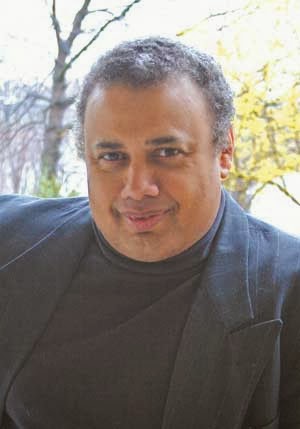
Composer Matthew Evan Taylor


Find out in this Q&A with Miami-based composer Matthew Evan Taylor where he got the inspiration for his composition Three Glorious Days and how working with ACO has influenced him. Three Glorious Days will be read at the upcoming New Music Readings with the Detroit Symphony Orchestra on March 9. 

American Composers Orchestra: What was the inspiration for your composition? How have you taken this inspiration and incorporated it into your work that will be read at the Detroit Symphony EarShot Classical Roots Readings?

Matthew Evan Taylor: "Three Glorious Days" was the nickname for the July Revolution of 1830 in France. That same year, Hector Berlioz finished Symphonie Fantastique. In Fantastique, Berlioz depicts that most French of traditions during revolutions–a character is beheaded by guillotine. That musical gesture is the basis for the structure of my Three Glorious Days.

ACO: Since you have been chosen to participate in these Readings, have you furthered developed your composition? How have you been preparing yourself and your work for the Readings?

MET: ACO sent our scores and parts to engraver Bill Holab. He made suggestions on how to make more professional material for the conductor and orchestra, which was very helpful. I also changed the instrumentation slightly. Three Glorious Days originally called for two harps, but for this reading I decided I'd like for one of the harp parts to be celeste instead. I'm looking forward to how that sounds live.

I am thinking of some questions concerning my career going forward, such as how to deal with all of the responsibilities that a composer has–searching for grants, maintaining your web presence, deadlines with ensembles.

ACO: During the readings your work will be workshopped with the help and guidance of Detroit Symphony music director Leonard Slatkin, mentor composers, and DSO musicians. What do you hope to get out of this experience? 


MET: The greatest gift I receive from mentors is advice. I'm looking forward to hearing objective assessments of my work. From the musicians, I always love to hear how to improve my notation to be able to communicate more clearly. From Mr. Slatkin, I'm anxious to hear what he has to say about composing for orchestra in the current climate, and how to build relationships with other ensembles.

ACO: Your composition will be read live to the public during the Readings. Is there anything about the piece that you would like the audience to know about before hearing it? 


MET: This was a fun piece to write and research. I learned some pretty surprising things about French history and the politics at the time. I should also mention that when I wrote this, September 2012, the presidential campaigns were heading into their final stretch. I found the rhetoric challenging the legitimacy of President Obama and the sustainability of the wealth disparity were strangely similar to the July Revolution. In both cases, there were promises of civility once there was a resolution (or election). But, in both cases, the same divisive language and posturing continued. Three Glorious Days reflects this desire for change and catharsis, but things still stay the same.

ACO: You will also taking part in the professional development workshops during the Readings. Is there anything specific that you hope you will learn from attending these workshops?

MET: I am really excited about the opportunity. I am interested in learning things that will help me sustain an active career, expand the scope of projects to pursue, and other opportunities available to musicians.


Monday, March 3, 2014

Detroit Symphony EarShot Classical Roots Readings Composer Spotlight – Composer Jonathan Bailey Holland

Composer Jonathan Bailey Holland
For composer Jonathan Bailey Holland, participating in the upcoming Detroit Symphony EarShot Classical Roots Readings will be a continuation of his professional relationship with the DSO, which stretches back to the tenure of former music director Neeme Jarvi in the early 1990s. Find out in this Q&A with Jonathan how the landmarks of the city of Chicago inspired his composition Shards of Serenity, which will be read at the upcoming Readings on March 9.

American Composers Orchestra: What was the inspiration for your composition? How have you taken this inspiration and incorporated it into your work that will be read at the Detroit Symphony EarShot Classical Roots Readings? 

Jonathan Bailey Holland: Commissioned by the Chicago Sinfonietta in partnership with the Chicago Architectural Foundation, Shards of Serenity is one of four movements that make up the work ChiScapes, a collaborative composition celebrating the architectural landmarks of the city of Chicago. In addition to my composition, ChiScapes includes movements composed by Armando Bayolo, Christopher Rogerson and Vivian Fung – each movement corresponding to a different building. The Chicago Sinfonietta premiered the work on June 8, 2013, with Mei-Ann Chen conducting. The landmark that I chose was Mies van der Rohe’s Crown Hall, on the campus of IIT.   Many who have actually been inside of the structure comment on the serenity experienced both inside and out. I can imagine feeling serene in such a large, open structure in which natural light streams through the ceiling to floor windows that envelope the entire building. Undoubtedly light streams in through all of the windows at various times of day in many different ways. With no internal walls to direct the journey through the building, a visitor would likely be forced to confront their physical location and presence at whatever location they found themselves within the building. Perhaps initially one’s attention would be drawn upwards since the glass at eye level is translucent, while the glass above eye level is transparent. And, again at least initially, I would imagine there is a moment of disorientation – an uncertainty about where to focus. Eventually a visitor would find their bearings, creating their own personal experience in the space. Shards of Serenity is a sonic representation of this type of experience, with the sounds being inspired by the physicality of the open space.

ACO: Since you have been chosen to participate in these Readings, have you furthered developed your composition? How have you been preparing yourself and your work for the Readings?

JBH: I have ideas for expanding the work, but I have not yet had the time to do so. I hope to return to it someday in the near future. As for preparing for the reading, I am looking forward to returning to work with the Detroit Symphony. I had several pieces performed by them during Neeme Jarvi's tenure as music director there. In 1993, I participated in the Unisys African American Composers Competition and National Forum. My work Martha's Waltz was one of the finalist compositions, and while I didn't win, Maestro Järvi took a liking to my music. Two years later I came back as a co-composer in residence with the Unisys program (along with Anthony Davis), composing a concert opening work, visiting several Detroit area schools, and serving on a panel discussion with other composers and artists, including Nikki Giovanni. In 2003, when the newly updated and expanded Max M Fisher center opened, my work Motor City Dance Mix was the very first work performed at the gala opening. The Detroit Symphony has been a major part of my compositional career and development, and I am excited to return after many years.  

ACO: During the readings your work will be workshopped with the help and guidance of Detroit Symphony music director Leonard Slatkin, mentor composers, and DSO musicians. What do you hope to get out of this experience? 

JBH: The opportunity for feedback from Maestro Slatkin and the mentor composers is a great opportunity. As a composer, it is hard to get perspective on your own music, and the opportunity to have other knowledgeable and experienced ears hear and assess my work is necessary.  

ACO: Your composition will be read live to the public during the Readings. Is there anything about the piece that you would like the audience to know about before hearing it? 

JBH: I would hope that the audience knows the story behind the creation of the work and the connection to Mies van der Rohe, but even if they don't, I believe the music will hold it's own.  

ACO: You will also taking part in the professional development workshops during the Readings. Is there anything specific that you hope you will learn from attending these workshops?  

JBH: I love writing for the orchestra, and while I have been fortunate enough to have works performed by various orchestras, I have many artistic ideas that I would like to bring to fruition and share with orchestras and audiences, as well as sharing my pre-existing work. As an educator and composer and generally busy person, the opportunities for focus solely on my own professional development are less frequent than I would like. Hopefully these workshops will generate ideas for how do more of all of this.

Thursday, February 27, 2014

Detroit Symphony EarShot Classical Roots Readings Composer Spotlight – Composer Kevin Scott


Composer Kevin Scott

Composer Kevin Scott’s A Point Served...(In Remembrance Arthur Ashe) was written in the commemoration of the sporting legend and civil rights champion Arthur Ashe. The composition will be read at the Detroit Symphony EarShot Classical Roots Readings on March 9 at Orchestra Hall in Detroit, MI. Find out from this interview with Kevin, how A Point Served… was in part a response to Debussy’s Jeux and what he hopes he will get out the experience of taking part in the Readings.

American Composers Orchestra: What was the inspiration for your composition? How have you taken this inspiration and incorporated it into your work that will be read at the Detroit Symphony EarShot Classical Roots Readings?  
Kevin Scott: When I heard about Arthur Ashe's passing, I felt that a chapter in both sports and African-American history had lost a great person who was a figurehead in his profession, and a true role model for generations to come, and a few days after his death I decided to compose a work in his memory. 

Ashe's inspiration as a champion of civil rights, as well as one of the best in the field of tennis, compelled me to combine the two aspects of his life. I wanted to musically capture the tennis game in an abstract way, and in doing this I decided to feature mallet percussion, harp and piano imitating the repartee between players, hitting the ball across the net, complete with footsteps, stumbles and a few inaudible breaths and mutterings, while at the same time there is a theme that begins in the strings that spells his name, employing a variation of soggetto cavato (carved-out subject), which I use in several of my compositions to either depict a person or a subject. This theme is subject to transfiguration and minute variation through the use of post-serial techniques, though not used in a strict way.

ACO: Since you have been chosen to participate in these Readings, have you furthered developed your composition? How have you been preparing yourself and your work for the Readings? 
KS: This will be its first performance with a live orchestra, so I consider it a finished composition, but that does not mean that it may be subject to revision after I hear it. I may like what I hear, or I may find myself re-orchestrating passages in the composition.

Preparing myself is a challenge. The best way to prepare one's self for something like this is not to worry about it until you get there, and then take the situation as it comes. You don't want to build false hopes or anxieties for yourself.

ACO: During the readings your work will be workshopped with the help and guidance of Detroit Symphony music director Leonard Slatkin, mentor composers, and DSO musicians. What do you hope to get out of this experience? 
KS: One hopes that they will look at the composition at face value and offer their suggestions with no prejudice. Composers always learn from each other, and also to hear the feedback from Leonard Slatkin will be an added plus, as he will have seen my music, or that of my colleagues, for the first time and will have an open ear and eye about what he's encountering.

ACO: Your composition will be read live to the public during the Readings. Is there anything about the piece that you would like the audience to know about before hearing it? 
KS: This is one of three works that make up my unofficial African-American trilogy for orchestra, the other two works musically portraying Betty Shabazz (Malcolm X's widow) and Thurgood Marshall, though all three works should be played separately. In many ways, A point served... is my response to Debussy's Jeux, which also depicts a tennis game, albeit with a more intimate and personal scenario than mine, but at the same time my composition is also the most abstract of my orchestral works, a fantasia uninhibited by classical form or structure of any sort.

ACO: You will also taking part in the professional development workshops during the Readings. Is there anything specific that you hope you will learn from attending these workshops?
KS: Again, one can learn from each other, and rather than dwell on what to expect, I'm just going in with an open eye and ear and learn what is and isn't, what should be done and what shouldn't be done, and as we continue to find new techniques, styles and presentations, learn to adapt them into one's own perspective of music and take it from there.