Showing posts with label Detroit Symphony. Show all posts

Thursday, February 28, 2019

EarShot Detroit Symphony Orchestra - Composer Spotlight: Marian L.H. Stephens

Marian L. H. Stephens is a native of Atlanta, Georgia. She has studied composition at the Royal Academy of Music in Stockholm, Sweden, and in 2007 became the first African American to receive the Doctorate of Music degree in Music Composition from Indiana University (Bloomington) Jacobs School of Music. Marian is the Founding Artistic Director of MLH Music Studio, which she established in 2010, where she is the lead instructor to students ages 4 to adult.

Marian's piece Out of Kilter was selected for the Detroit Symphony Orchestra EarShot Readings, where it will be rehearsed and performed under the direction of conductor André Raphel. Public performances will take place on March 6 and March 9 at the Fisher Music Center. Click here for more information.

We spoke with Marian about her piece and the readings.

Composer and educator Dr. Marian L.H. Stephens

American Composers Orchestra: What was your reaction to finding out your piece had been selected for the Detroit Symphony Orchestra EarShot New Music Readings?

Marian L.H. Stephens: I was very humbled, and excited, to learn that my piece, "Out of Kilter: sounding scenes from Black America," was selected for the DSO EarShot New Music Readings. As a professional composer, striving to be "heard," I welcome opportunities, such as this, that are designed to create new relationships between audiences, living composers, and their new music! On a personal note, my selection into the program allows me to teach my daughters, Nia, age 4.5, and Ava, age 2,  the importance of seeing one's dreams come to fruition. I want my girls to be proud of me. I want them to know about my continued efforts to make a very "musical" mark on this world. I thank EarShot for helping me do so!

ACO: You write in your program note that Out of Kilter is inspired by images from Chase Campbell's children's book Riding the Sphinx and Other Adventures at the Museum. Can you talk about a couple of the specific images, their meaning to you, and how they are represented through music?

MS: Atlanta area artist, Chase Campbell, and I have been friends for over 20 years. When I compose, I often look for inspiration from the visual arts realm. Mr. Campbell's works resonate with me because I can see myself, my family, and friends in them. "Out of Kilter" is a through composed work, made up of five, distinct sections. "The Connoisseur" is my most favorite image out of the five. To me, everything about the image looks forward with a great positive energy. The viewer looks forward at the central figure, as he looks forward at a painting, which features a man and woman embracing, as they look forward, into a bright future. The positive energy, I receive from this image, is similar to how I feel when I dance, and it is why I composed a light-hearted, loop-sided dance to accompany this image. 


Images from Riding the Sphinx and Other Adventures at the Museum by Chase Campbell

ACO: What are you doing to prepare for the readings? Are there any changes you have made to your piece?

MS: I haven't made any changes to my piece. I want to see if what I wrote really works. I am preparing for the readings by making sure that I can present simple, clear explanations about my music. I have been a music educator for over 20 years. I have taught pre-school students, as young as 2, and graduate students as old as 50. The one thing I have learned from these experiences is to "keep it plain!" This is my measure of success. I believe, if too much explanation is required, then a trip back to the drawing board is warranted!
ACO: What are you looking forward to about the workshops and readings? What do you hope to learn from the experience?

MS: I look forward to cultivating new relationships that will yield new collaborations. I welcome mistakes because they bring growth. So, my ultimate learning goal is to see how I can improve my writing, overall. Humans are creatures of habit, and it is very easy to compose the same "mistake" repeatedly. I want this opportunity to reveal the things that plague my writing the most. I want to walk away a better composer!

Marian's piece Out of Kilter was selected for the Detroit Symphony Orchestra EarShot Readings, where it will be rehearsed and performed under the direction of conductor André Raphel. Public performances will take place on March 6 and March 9 at the Fisher Music Center. Click here for more information.

Wednesday, February 27, 2019

EarShot Detroit Symphony Orchestra - Composer Spotlight: Brian Nabors

Composer Brian Nabors' music draws from combinations of Jazz/R&B and contemporary music. He is currently completing doctoral studies at the College-Conservatory of Music, University of Cincinnati, with professor Douglas Knehans. Brian's works have been performed the Cincinnati Symphony Orchestra, Detroit Chamber Winds and Strings, Zodiac Trio, Unheard-of//Ensemble, and the Contemporary Directions Ensemble at the University of Michigan. He has received awards from the Music Teachers National Association (MTNA), Alabama Music Teachers Association (AMTA), and the Birmingham Music Club.

Brian's piece Rise was selected for the Detroit Symphony Orchestra EarShot Readings, where it will be rehearsed and performed under the direction of conductor André Raphel. Public performances will take place on March 6 and March 9 at the Fisher Music Center. Click here for more information.

We spoke with Brian about his piece and the readings.

Composer Brian Nabors

American Composers Orchestra: What was your reaction to finding out your piece had been selected for the Detroit Symphony Orchestra EarShot New Music Readings?

Brian Nabors: I was more than elated! I view it as an incredible blessing and milestone in this early stage of my compositional career. I have been in love with the Detroit Symphony for quite some time and have always admired their diligence of promoting diversity, culturally enriching musical experiences, and overall support of new music. I very much look forward to what this experience will bring.

ACO: You mention in your bio that Jazz and R&B, combined with contemporary classical influences, feed into your compositional voice. Can you talk about some of your greatest influences from the worlds of Jazz and R&B? In what ways do Jazz and R&B show up in your compositions?

BN: I grew up in the 1990s-2000s, when smooth R&B and Neo Soul reigned supreme. There are several artists that I loved from that time as well as today. Everyone from Boys II Men, Maxwell, Toni Braxton and Musiq Soulchild, to jazz/funk acts like Chick Corea, Herbie Hancock, Wynton Marsalis, and Snarky Puppy continue to play a huge role in the cultivation of my compositional aesthetic. Location and culture also played a role in what I absorbed. I'm originally from Birmingham, AL. There's so much soul throughout the city! It has an eclectic mix of gospel, bluegrass, jazz, and R&B all tightly rolled into one! The main compositional traits from these worlds that often make it into my music are a heavy sense of rhythmic drive, a very complex system of harmonic activity, and intense visceral development of motives/themes.

ACO: Rise is an orchestra adaption of the first movement of your Concerto for Hammond Organ and Orchestra. In regards to your concerto, can you talk about the challenges and rewards of combining Hammond Organ and orchestra? In regards to Rise, how did you go about re-orchestrating the Hammond Organ part?

BN: The Concerto for Hammond Organ and Orchestra was such a massive and rewarding undertaking! There are several experiences I've had that definitely contributed to my integration of the instrument with orchestra. As a Hammond organist myself, I had the fortunate advantage of understanding how the effects (such as the drawbar harmonic system, percussion, and leslie/tremolo settings) would fit in such an ensemble of endless sound possibilities. I essentially scored the instrument as I would any solo instrument with orchestra, allowing the orchestration to be constructed in a way that is most supportive of the soloist. I would say the greatest challenge was working out the numerous sound possibilities with the stage setup of the organ. In the score, I've given quite a few options for obtaining balance with orchestra as the piece is scored for traditional Hammond models and well as Hammond's new digital line of organs. The instrument could be run through a hall's sound system with a monitor for the player, or the Leslie speaker could sit on stage with the player depending on the acoustic situation.

As for Rise, I took one week and tore apart the solo, assigning suitable portions to the most equally idiomatic sections of the orchestra. I often found myself adding additional melodies and passages to support which ever section was in the forefront at the time. The orchestration would sometimes be bare because I originally made room for the soloist. This was also an advantage as the open space allowed the different families of the orchestra to speak well. Also, I have four percussionists in the concerto and three in this piece, so it gave me a lot of ideas of instruments to add as well as timbral possibilities to enhance the orchestration.

ACO: What are you looking forward to about the workshops and readings? What do you hope to learn from the experience?

BN: I'm looking forward to everything! One of the things I'm especially excited about, in addition to the readings, are the educational workshops and visitations we'll be participating in. As an artist, these types of activities are particularly meaningful to me. Knowing where I've come from, I realize how fortunate I was to have visitations from artists and musicians who took time out to expose young people to the gift of the arts. I have very special memories of how the simple act of just seeing these people awakened all of the underlying potential that I had to become who I am today. I often tell my colleagues if you want your communities to experience the overwhelming power of classical music, it starts from the bottom. It is there that young people have the opportunity to develop a love and relationship with this music that then inspires them treasure it, support it, and care for its well-being. I also look forward to the incredible advice that I'll receive from the mentor composers as well as the various amounts of musical intricacies that I'll discover while working though the piece. It's truly an incredible experience like no other!

Brian's piece Rise was selected for the Detroit Symphony Orchestra EarShot Readings, where it will be rehearsed and performed under the direction of conductor André Raphel. Public performances will take place on March 6 and March 9 at the Fisher Music Center. Click here for more information.

Learn more about Brian at www.briannabors.com
Follow him on Facebook, Twitter, Instagram, and YouTube

Tuesday, February 26, 2019

EarShot Detroit Symphony Orchestra - Composer Spotlight: Kerwin Young

Kerwin Young is a prolific American composer and producer who has worked with iconic artists including Ice Cube, Mobb Deep, Busta Rhymes, and Public Enemy. His works have been performed by Music From China, Kansas City Symphony, Chicago Modern Orchestra Project, University City Symphony, and other well-known ensembles. As a film and TV composer, Young has worked on projects including the 1994 debut season of New York Undercover; the 1997 directorial debut of Goetz Grossman, Tar; KCPT's weekly news series Ruckus; and has composed and produced original songs for feature motion pictures such as Do The Right Thing (1989), Green Card (1990), Sister Act 2 (1992), and American Crime Story: The People Vs O.J. Simpson (2016).

Young studied music composition at the University of Missouri-Kansas City Conservatory of Music and Dance with Chen Yi, Zhou Long, and Jazz Messenger legend, Bobby Watson. In 2017, Young served as a U.S. Cultural Ambassador for Hip-Hop in Egypt, teaching music composition, production, media scoring, and business. 

Young's piece American Caravan was selected for the Detroit Symphony Orchestra EarShot Readings, where it will be rehearsed and performed under the direction of conductor André Raphel. Public performances will take place on March 6 and March 9 at the Fisher Music Center. Click here for more information.

We spoke with Young about his piece and the readings.

Composer and producer Kerwin Young

American Composers Orchestra: What was your reaction to finding out your piece had been selected for the Detroit Symphony Orchestra EarShot New Music Readings? 

Kerwin Young: I was ecstatic, and a bit surprised really. I've been applying to EarShot for about ten years or more, and to finally get in; well, I was extremely happy.

ACO: In your experience writing for orchestra, what have been the biggest challenges for you?

KY: I don't ever recall facing any challenges pertaining to orchestral writing. I spent six years (1994-2000) studying composition, instrumentation, and orchestration on my own. I began writing for orchestra in 1999, and in 2000, I had two full large works written on manuscript paper. In 2000, I met with the librarians at the Atlanta Symphony Orchestra, Steve Sherrill and Bob O'brien; for their critique of my work. They found nothing wrong with my works; except for my improper notation for a harp glissandi. My further pursuit in education posed more of a challenge than the music ever did.

My greatest challenge began when I applied to the Paris Conservatory in 2002. They told me that I was too old to be accepted. That hurt me more than anything. I've never experienced age discrimination. I waited seven years before re-applying to another school; which happened to be University of Missouri-Kansas City. By that time, I'd composed a decent amount of orchestral works that culminated for quite a strong portfolio.

ACO: Can you talk about any ways that your experience as a record producer (working with acclaimed artists including Ice Cube, Busta Rhymes, Public Enemy, Eddie Moore, and many others) has helped you become a successful composer of large-scale works?

KY: As a recording producer and song writer, I had experience early on with large scale works. Many of the albums I produced toward the start of my career followed the traditional practice of creating conceptual albums with interludes, and fully developed, interrelated themes. I wasn't calling myself a composer at that time, but I was doing the same thing to a certain extent. I was also writing music for industrial videos early on, and that also contributed to me writing long form works.

Another thing too, as a producer, I was also called upon to do remakes of older recordings. In 1994, I began composing; for the most part, transcribing parts from recordings; which included a lot of Gil Evans orchestrations for the early Miles Davis large ensemble recordings.

ACO: Your piece American Caravan is inspired by current events taking place in the Americas, highlighting themes of human migration, overcoming hardships, and seeking a better life. What is your process for composing music that evokes these real-life themes? Is there a period of research? Do you compose with specific images, stories, or personal experiences in mind?

KY: Hmmm… as a composer, I get to play God; manipulating sound, doing whatever I want. I get to approve or disapprove what's been notated; to be the sole authority that deems it either good or unworthy. I've always worked like this; trying to find a new sound or a new approach to something I may have previously done. For each new work, it's an act of sonic manipulation; just as if I were producing a song or an album. I have a few different work flows, but my main process goes like this: Subject - Mental Image - Sound. This order ties in with my passion for film scoring. Once I find an interesting subject, I research it long enough for it to set in my mind. I'll then develop a mental picture; like a movie. Next, I'll purchase a moleskine book specifically for work at hand, and I will begin sketching my ideas; creating a sonic image inspired from my mental image. Each dedicated Moleskine includes a rough outline of the entire work; including the tonal palette, dynamic arc, how many movements (if any), and the instrumentation. I never compose with a particular ensemble or musician in mind. I prefer to write what I want to hear, and that approach keeps my creativity fresh; not constrained by any parameters.

I also spend a lot of time composing away from my piano and guitar. I'll set out on a creative writing spree, with the intent to organize it later. This process allows me to escape the western plane of twelve notes, and to dive into the realm of microtonality and sonic frequencies. Much of this is linked with my passion for film scoring, and many times, I'll write an 8-15 minute work in 3-4 days from this process; either as a suite or a single movement work.

Another process is to compose via a digital workstation such as Digital Performer, Studio One, or Pro Tools. I begin via midi input into the computer, and that data will be rewired into Sibelius; where I may turn a small, one-minute idea into a fully developed work not shorter than eight minutes.

The challenging part and most time consuming task is inputting what I've written into Sibelius. With the necessity of working efficiently, I'm always mindful that I'll need to render parts at a later time. Great caution is taken when inputting into Sibelius; doing my best not to create potential challenges that would hinder me if required to export parts in a hurry.

ACO: What are you looking forward to about the workshops and readings? What do you hope to learn from the experience?

KY: Interacting with the young student composers and musicians during the scheduled workshops is very important for me. I'm just as excited to hear how my reduction for the student ensemble reads, as much as I am by the DSO reading. I'll have an opportunity to learn first hand whether or not I've done well at writing a playable reduction for our young sisters and brothers. And, with the DSO, I'm looking to fine tune my work, and to also learn just how far I can push the limits of difficulty.

For the readings, I'm definitely looking forward to hear the works of the other honored composers; to share in the excitement with them, and to share our creative processes and backgrounds; learning new and different approaches at what we do.

I dream of having a residency with a major orchestra, and this experience will definitely provide the necessary tools toward that achievement; providing both business and creative aesthetics.

Kerwin Young's piece American Caravan will be performed as part of the Detroit Symphony Orchestra EarShot Readings, which are free and open to the public on March 6 and March 9 at the Fisher Music Center. Click here for more information.

Learn more about Kerwin Young at www.kerwinyoung.com

Friday, February 22, 2019

EarShot Detroit Symphony Orchestra - Composer Spotlight: Anthony Tidd

Anthony Tidd is an international touring bassist, composer, and bandleader. Born and raised in London to Trinidadian parents, Tidd now lives in Philadelphia, where he is a master lecturer at The University of the Arts and Jazz Artistic Advisor at Kimmel Center. A Grammy Award winner, Tidd has recorded and produced records for multiplatinum artists such as The Roots, Lady Gaga, The Black Eyed Peas, Fergie, Pink, and many others. He has composed scores for major film and television projects, most recently Jay Z’s Paramount/BET docuseries, Rest in Power – The Trayvon Martin Story.

Anthony Tidd's piece Sa and Alatangana was selected for the Detroit Symphony Orchestra EarShot Readings, where it will be rehearsed and performed under the direction of conductor André Raphel. Public performances will take place on March 6 and March 9 at the Fisher Music Center. Click here for more information.

We spoke with Anthony about his piece and the readings.

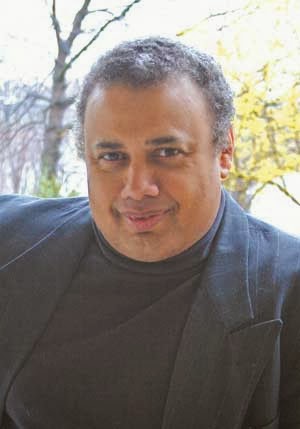
Composer, bassist, and bandleader Anthony Tidd

American Composers Orchestra: What was your reaction to finding out your piece had been selected for the Detroit Symphony Orchestra EarShot New Music Readings?

Anthony Tidd: I was so excited and honored to have my piece considered and chosen to be read as a part of the Detroit residency. As a black composer, who is very interested in the orchestra and canon of orchestral music, one of the greatest challenges for me is to dedicate the time it takes to write for orchestra, to music which has little to no chance of ever being played or heard. This is one of the reasons why people within my community have such little experience, when it comes to composing for the orchestra and thus little to no investment in the future of the institution.

Residency programs like this do a lot to help in changing this reality, but obviously a lot more work needs to be done.

ACO: Your program note says that your piece is dedicated to your aunt Ruth Harper, who passed away last year after a long battle with cancer. Can you talk about the thematic material in your piece and any ways that it was inspired by your aunt or represents her life?

AT: Well, the piece, Sa and Alatangana is about life and as a part of this, also about death. When my aunt, who was also my godmother and my mother’s closest sister, passed away from a brain tumor, as well as being sad, I also started to think a lot conceptually about the different stages of life, growth, and even cancer itself. 

Actually, I also thought a lot about growth, from a biological point of view in the past, and also from the standpoint of looking at the fascinating universal laws which govern this. Inevitably such contemplation often leads one to the question of creation, God, and one’s own place within this vast universe. I have always imagined, and worked on the possibility of a correlation between the many universals outside of music, and music itself.

ACO: The name of your piece, Sa and Alatangana, comes from the two creator deities of the Kono people of Guinea. Why did you choose this name for your piece?

AT: As you mention, this name comes directly from a Guinean folkloric creation myth, which deals with  the dawn of creation, love, and eventually life and death, so it was a natural fit for what I was trying to express compositionally. As a part of the African diaspora, I am of course fascinated by such myths, and how they relate to some of the more widely disseminated myths of creation in the west, or religion.

I’m not really dealing with the religious aspect at all. What I am trying to deal with is intention, growth, symmetry, rhythm, patterns, “divine” proportions, etc.

ACO: What are you looking forward to about the workshops and readings? What do you hope to learn from the experience?

AT: It’s always great to be in a creative environment. I strive to keep myself emerged in situations where I can grow, learn, or assist others in this endeavor. But, as you know, this is not always so easy.

It’s also just going to be great to hear my music, and that of my colleagues, played by a great orchestra. I’ve learned so much in the past from such experiences (this is my third time having a piece played by an orchestra), so most of all I’m anxious to see if I actually learned anything the last two times! Hahaha!

I want to see how much closer I am with getting the limitations of “the page” to accurately represent what is in my head! Particularly in terms of trying to communicate the very specific rhythmic sense, which is arguably the most important part of the musical tradition that I am part of. We’ll see.

Anthony Tidd's piece Sa and Alatangana will be performed as part of the Detroit Symphony Orchestra EarShot Readings, which are free and open to the public on March 6 and March 9 at the Fisher Music Center. Click here for more information.

Learn more about Anthony Tidd at www.pirerecordings.com
Follow him on Facebook, Twitter, and Instagram

Friday, March 7, 2014

Detroit Symphony EarShot Classical Roots Readings Composer Spotlight – Composer Matthew Evan Taylor

 
Composer Matthew Evan Taylor


Find out in this Q&A with Miami-based composer Matthew Evan Taylor where he got the inspiration for his composition Three Glorious Days and how working with ACO has influenced him. Three Glorious Days will be read at the upcoming New Music Readings with the Detroit Symphony Orchestra on March 9. 

American Composers Orchestra: What was the inspiration for your composition? How have you taken this inspiration and incorporated it into your work that will be read at the Detroit Symphony EarShot Classical Roots Readings?

Matthew Evan Taylor: "Three Glorious Days" was the nickname for the July Revolution of 1830 in France. That same year, Hector Berlioz finished Symphonie Fantastique. In Fantastique, Berlioz depicts that most French of traditions during revolutions–a character is beheaded by guillotine. That musical gesture is the basis for the structure of my Three Glorious Days.

ACO: Since you have been chosen to participate in these Readings, have you furthered developed your composition? How have you been preparing yourself and your work for the Readings?

MET: ACO sent our scores and parts to engraver Bill Holab. He made suggestions on how to make more professional material for the conductor and orchestra, which was very helpful. I also changed the instrumentation slightly. Three Glorious Days originally called for two harps, but for this reading I decided I'd like for one of the harp parts to be celeste instead. I'm looking forward to how that sounds live.

I am thinking of some questions concerning my career going forward, such as how to deal with all of the responsibilities that a composer has–searching for grants, maintaining your web presence, deadlines with ensembles.

ACO: During the readings your work will be workshopped with the help and guidance of Detroit Symphony music director Leonard Slatkin, mentor composers, and DSO musicians. What do you hope to get out of this experience? 


MET: The greatest gift I receive from mentors is advice. I'm looking forward to hearing objective assessments of my work. From the musicians, I always love to hear how to improve my notation to be able to communicate more clearly. From Mr. Slatkin, I'm anxious to hear what he has to say about composing for orchestra in the current climate, and how to build relationships with other ensembles.

ACO: Your composition will be read live to the public during the Readings. Is there anything about the piece that you would like the audience to know about before hearing it? 


MET: This was a fun piece to write and research. I learned some pretty surprising things about French history and the politics at the time. I should also mention that when I wrote this, September 2012, the presidential campaigns were heading into their final stretch. I found the rhetoric challenging the legitimacy of President Obama and the sustainability of the wealth disparity were strangely similar to the July Revolution. In both cases, there were promises of civility once there was a resolution (or election). But, in both cases, the same divisive language and posturing continued. Three Glorious Days reflects this desire for change and catharsis, but things still stay the same.

ACO: You will also taking part in the professional development workshops during the Readings. Is there anything specific that you hope you will learn from attending these workshops?

MET: I am really excited about the opportunity. I am interested in learning things that will help me sustain an active career, expand the scope of projects to pursue, and other opportunities available to musicians.


Monday, March 3, 2014

Detroit Symphony EarShot Classical Roots Readings Composer Spotlight – Composer Jonathan Bailey Holland

Composer Jonathan Bailey Holland
For composer Jonathan Bailey Holland, participating in the upcoming Detroit Symphony EarShot Classical Roots Readings will be a continuation of his professional relationship with the DSO, which stretches back to the tenure of former music director Neeme Jarvi in the early 1990s. Find out in this Q&A with Jonathan how the landmarks of the city of Chicago inspired his composition Shards of Serenity, which will be read at the upcoming Readings on March 9.

American Composers Orchestra: What was the inspiration for your composition? How have you taken this inspiration and incorporated it into your work that will be read at the Detroit Symphony EarShot Classical Roots Readings? 

Jonathan Bailey Holland: Commissioned by the Chicago Sinfonietta in partnership with the Chicago Architectural Foundation, Shards of Serenity is one of four movements that make up the work ChiScapes, a collaborative composition celebrating the architectural landmarks of the city of Chicago. In addition to my composition, ChiScapes includes movements composed by Armando Bayolo, Christopher Rogerson and Vivian Fung – each movement corresponding to a different building. The Chicago Sinfonietta premiered the work on June 8, 2013, with Mei-Ann Chen conducting. The landmark that I chose was Mies van der Rohe’s Crown Hall, on the campus of IIT.   Many who have actually been inside of the structure comment on the serenity experienced both inside and out. I can imagine feeling serene in such a large, open structure in which natural light streams through the ceiling to floor windows that envelope the entire building. Undoubtedly light streams in through all of the windows at various times of day in many different ways. With no internal walls to direct the journey through the building, a visitor would likely be forced to confront their physical location and presence at whatever location they found themselves within the building. Perhaps initially one’s attention would be drawn upwards since the glass at eye level is translucent, while the glass above eye level is transparent. And, again at least initially, I would imagine there is a moment of disorientation – an uncertainty about where to focus. Eventually a visitor would find their bearings, creating their own personal experience in the space. Shards of Serenity is a sonic representation of this type of experience, with the sounds being inspired by the physicality of the open space.

ACO: Since you have been chosen to participate in these Readings, have you furthered developed your composition? How have you been preparing yourself and your work for the Readings?

JBH: I have ideas for expanding the work, but I have not yet had the time to do so. I hope to return to it someday in the near future. As for preparing for the reading, I am looking forward to returning to work with the Detroit Symphony. I had several pieces performed by them during Neeme Jarvi's tenure as music director there. In 1993, I participated in the Unisys African American Composers Competition and National Forum. My work Martha's Waltz was one of the finalist compositions, and while I didn't win, Maestro Järvi took a liking to my music. Two years later I came back as a co-composer in residence with the Unisys program (along with Anthony Davis), composing a concert opening work, visiting several Detroit area schools, and serving on a panel discussion with other composers and artists, including Nikki Giovanni. In 2003, when the newly updated and expanded Max M Fisher center opened, my work Motor City Dance Mix was the very first work performed at the gala opening. The Detroit Symphony has been a major part of my compositional career and development, and I am excited to return after many years.  

ACO: During the readings your work will be workshopped with the help and guidance of Detroit Symphony music director Leonard Slatkin, mentor composers, and DSO musicians. What do you hope to get out of this experience? 

JBH: The opportunity for feedback from Maestro Slatkin and the mentor composers is a great opportunity. As a composer, it is hard to get perspective on your own music, and the opportunity to have other knowledgeable and experienced ears hear and assess my work is necessary.  

ACO: Your composition will be read live to the public during the Readings. Is there anything about the piece that you would like the audience to know about before hearing it? 

JBH: I would hope that the audience knows the story behind the creation of the work and the connection to Mies van der Rohe, but even if they don't, I believe the music will hold it's own.  

ACO: You will also taking part in the professional development workshops during the Readings. Is there anything specific that you hope you will learn from attending these workshops?  

JBH: I love writing for the orchestra, and while I have been fortunate enough to have works performed by various orchestras, I have many artistic ideas that I would like to bring to fruition and share with orchestras and audiences, as well as sharing my pre-existing work. As an educator and composer and generally busy person, the opportunities for focus solely on my own professional development are less frequent than I would like. Hopefully these workshops will generate ideas for how do more of all of this.

Thursday, February 27, 2014

Detroit Symphony EarShot Classical Roots Readings Composer Spotlight – Composer Kevin Scott


Composer Kevin Scott

Composer Kevin Scott’s A Point Served...(In Remembrance Arthur Ashe) was written in the commemoration of the sporting legend and civil rights champion Arthur Ashe. The composition will be read at the Detroit Symphony EarShot Classical Roots Readings on March 9 at Orchestra Hall in Detroit, MI. Find out from this interview with Kevin, how A Point Served… was in part a response to Debussy’s Jeux and what he hopes he will get out the experience of taking part in the Readings.

American Composers Orchestra: What was the inspiration for your composition? How have you taken this inspiration and incorporated it into your work that will be read at the Detroit Symphony EarShot Classical Roots Readings?  
Kevin Scott: When I heard about Arthur Ashe's passing, I felt that a chapter in both sports and African-American history had lost a great person who was a figurehead in his profession, and a true role model for generations to come, and a few days after his death I decided to compose a work in his memory. 

Ashe's inspiration as a champion of civil rights, as well as one of the best in the field of tennis, compelled me to combine the two aspects of his life. I wanted to musically capture the tennis game in an abstract way, and in doing this I decided to feature mallet percussion, harp and piano imitating the repartee between players, hitting the ball across the net, complete with footsteps, stumbles and a few inaudible breaths and mutterings, while at the same time there is a theme that begins in the strings that spells his name, employing a variation of soggetto cavato (carved-out subject), which I use in several of my compositions to either depict a person or a subject. This theme is subject to transfiguration and minute variation through the use of post-serial techniques, though not used in a strict way.

ACO: Since you have been chosen to participate in these Readings, have you furthered developed your composition? How have you been preparing yourself and your work for the Readings? 
KS: This will be its first performance with a live orchestra, so I consider it a finished composition, but that does not mean that it may be subject to revision after I hear it. I may like what I hear, or I may find myself re-orchestrating passages in the composition.

Preparing myself is a challenge. The best way to prepare one's self for something like this is not to worry about it until you get there, and then take the situation as it comes. You don't want to build false hopes or anxieties for yourself.

ACO: During the readings your work will be workshopped with the help and guidance of Detroit Symphony music director Leonard Slatkin, mentor composers, and DSO musicians. What do you hope to get out of this experience? 
KS: One hopes that they will look at the composition at face value and offer their suggestions with no prejudice. Composers always learn from each other, and also to hear the feedback from Leonard Slatkin will be an added plus, as he will have seen my music, or that of my colleagues, for the first time and will have an open ear and eye about what he's encountering.

ACO: Your composition will be read live to the public during the Readings. Is there anything about the piece that you would like the audience to know about before hearing it? 
KS: This is one of three works that make up my unofficial African-American trilogy for orchestra, the other two works musically portraying Betty Shabazz (Malcolm X's widow) and Thurgood Marshall, though all three works should be played separately. In many ways, A point served... is my response to Debussy's Jeux, which also depicts a tennis game, albeit with a more intimate and personal scenario than mine, but at the same time my composition is also the most abstract of my orchestral works, a fantasia uninhibited by classical form or structure of any sort.

ACO: You will also taking part in the professional development workshops during the Readings. Is there anything specific that you hope you will learn from attending these workshops?
KS: Again, one can learn from each other, and rather than dwell on what to expect, I'm just going in with an open eye and ear and learn what is and isn't, what should be done and what shouldn't be done, and as we continue to find new techniques, styles and presentations, learn to adapt them into one's own perspective of music and take it from there.